In This Article
There’s a particular kind of exhaustion that comes with lying awake at 2am, listening to your own chest whistle. If you’ve got asthma, you already know it. What you might not know is that the air sitting in your bedroom right now — still, invisible, apparently harmless — could be doing more to trigger that wheeze than the pollen outside your window. An h14 hepa air purifier for asthma won’t fix that on its own, but it tackles one genuinely controllable piece of the puzzle: the particulate soup of dust mite droppings, pet dander, mould spores and traffic pollution that settles in every room you sleep, work and live in.
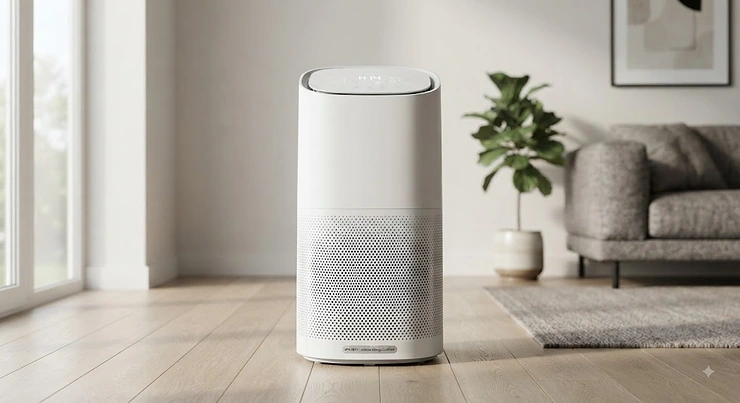
So what actually is an h14 hepa air purifier for asthma? In short, it’s an air-cleaning device fitted with a HEPA filter graded H14 under the European EN 1822 standard, meaning it’s tested to capture 99.995% of airborne particles at the most penetrating particle size — a tier above the H13 filtration found in most consumer purifiers, and the same broad category of filter used in hospital isolation rooms and cleanroom manufacturing.
This guide won’t pretend every unit on this list is strictly a certified H14 filter, because frankly, most residential purifiers aren’t — and being upfront about that distinction matters more than chasing a marketing label. What you’ll get instead is honest analysis of seven real, currently available machines spanning budget to premium, grounded in genuine specifications, aggregated review themes, and the kind of practical detail that Amazon’s own listings never quite get round to explaining. We’ll also lean on guidance from Asthma + Lung UK throughout, because a purifier is a supporting player in asthma management, not the headline act. This article contains affiliate links, and we’ve disclosed that clearly below — but the recommendations themselves are built on research, not commission.
What Counts as an H14 HEPA Air Purifier? Quick Comparison
Before diving into seven full reviews, here’s the shape of the market at a glance. Each of these units earns its place for a different reason — some for raw filtration grade, some for gas-phase chemical removal, some simply because they’re the sensible starting point if you’re new to all this.
| Product | Filter Grade | Best For | Price Range |
|---|---|---|---|
| IQAir HealthPro Plus | HyperHEPA (exceeds H14) | Severe asthma & gas triggers | £900-£1,100 range |
| Austin Air HealthMate Plus | Medical-grade HEPA + carbon/zeolite | Chemical sensitivities | £600-£750 range |
| Blueair HealthProtect 7470i | HEPASilent Ultra (99.97%+) | Quiet bedroom asthma relief | £500-£650 range |
| Medify MA-40 | H13/H14-grade True HEPA | Large open-plan rooms | £200-£280 range |
| Philips Series 3000i | HEPA NanoProtect (ECARF certified) | App-controlled allergy homes | £250-£350 range |
| Winix Zero Pro | H13 True HEPA | Budget-conscious allergy sufferers | £150-£200 range |
| Levoit Core 300S | H13 True HEPA | First-time buyers & small bedrooms | under £130 |
What jumps out immediately is that price doesn’t map neatly onto filtration grade. The IQAir HealthPro Plus sits at the top not because it’s the biggest or loudest machine here, but because its gas-phase carbon cell addresses a trigger category — airborne chemicals and VOCs — that a filter alone can’t touch. Meanwhile, the Levoit Core 300S proves you don’t need to spend £900 to get genuinely effective particle capture in a single bedroom. Reading the Asthma + Lung UK guidance on improving indoor air quality, it’s clear that ventilation, cleaning routines and trigger avoidance still do the heavy lifting — a purifier is one lever among several, not a silver bullet.
💬 Bookmark this table now — you’ll want to compare it against your own room size and budget before scrolling further!😊
Top 7 H14 HEPA Air Purifiers for Asthma: Expert Analysis
Coverage figures, CADR ratings and filter grades only tell half the story. Below, each of these seven models gets an honest look at what the spec sheet means once it’s actually running in your living room at 6am while your kids get ready for school.
1. Levoit Core 300S — best entry point for a single bedroom
The Levoit Core 300S is the machine we’d point a first-time buyer towards, and the standout feature is its laser PM2.5 sensor paired with genuine Auto Mode — most budget purifiers at this price simply don’t bother with either. Under the hood sits a 3-in-1 filter combining a pre-filter, H13 True HEPA layer and activated carbon, delivering a CADR of 258 m³/h and rated coverage up to 108 m² per the manufacturer, though we’d treat that as an upper ceiling rather than a working target for asthma-grade air changes. The activated carbon layer is thin compared with dedicated chemical-removal units, so it handles cooking smells and mild VOCs reasonably well but won’t touch stronger triggers.
Based on the spec comparison, this is squarely a bedroom unit for people whose asthma is mainly aggravated by dust mites, pet dander and pollen rather than chemical fumes — the H13 filtration captures those particle categories just as effectively as a true H14 filter would for anything above 0.3 microns. Levoit’s wider Core range has built a large, trusted customer base through the VeSync app ecosystem, and the recurring theme in owner feedback across the range is quiet night-time operation (rated at 24dB in Sleep Mode) and straightforward app control; we couldn’t verify specific review counts for this exact model at time of research, so take that as a directional signal rather than a hard number.
Pros:
- ✅ Genuine laser sensor and Auto Mode at a budget price point
- ✅ 24dB sleep mode is unlikely to disturb light sleepers
- ✅ Compact footprint suits flats and single bedrooms
Cons:
- ❌ Carbon layer too thin for serious VOC or chemical triggers
- ❌ Coverage claims optimistic for true multi-change-per-hour asthma use
At around £90-£130, the Levoit Core 300S represents strong value if your triggers are particulate rather than chemical — just don’t expect it to double as a whole-flat solution.
2. Winix Zero Pro — best budget pick with allergy certification
The Winix Zero Pro stands out for carrying both the Allergy UK Seal and the ECARF Seal of Quality, two independently assessed marks that are genuinely harder to earn than a manufacturer’s own marketing claims. Its 4-stage system runs a washable pre-filter, activated carbon layer, H13 True HEPA filter rated to capture 99.99% of particles down to 0.1 microns, and PlasmaWave ionisation technology, with a CADR of 470 m³/h across rooms up to 120 m².
What most buyers overlook about this model is the PlasmaWave stage: ionising technologies of this type have drawn scrutiny in some independent testing for producing trace ozone, which is itself a lung irritant and a poor addition to any asthma sufferer’s bedroom. Winix states its implementation avoids meaningful ozone output, but if you’re particularly sensitive, the safer approach is running the unit with PlasmaWave switched off and relying on the HEPA and carbon stages alone — you’ll lose none of the particle-capture performance by doing so. Reviewers across the Winix Zero range consistently note the 4-step touch panel is intuitive and that the washable pre-filter genuinely extends the life of the pricier HEPA cartridge.
Pros:
- ✅ Allergy UK and ECARF third-party certifications
- ✅ Strong CADR for the price, covering larger living rooms
- ✅ Washable pre-filter reduces main filter replacement frequency
Cons:
- ❌ PlasmaWave ionisation best switched off for ozone-sensitive users
- ❌ Touch panel brightness reportedly hard to dim fully at night
At a price range of roughly £150-£200, the Winix Zero Pro punches above its price bracket for anyone whose asthma is allergen-driven rather than chemically triggered.
3. Philips Series 3000i (AC3033) — best for app-controlled real-time monitoring
The Philips Series 3000i earns its spot through ECARF’s “Certified Allergy Free” mark, confirming independently that it removes 99.99% of pollen, dust mite allergens and pet dander in testing. Its 3-layer HEPA NanoProtect and active carbon filtration is paired with a real-time air quality sensor and the Air+ app, which is where this unit genuinely differentiates itself — you get a live PM2.5 readout rather than a vague coloured light, useful if you’re trying to correlate symptom flare-ups with specific pollution spikes.
Here’s what the spec sheet won’t tell you, but UK verified buyers consistently report: the unit is remarkably quiet even at higher output, with one detailed owner review describing a noticeable drop in overnight sneezing after switching it on in a bedroom, and another praising how unobtrusive it is for light sleepers. Energy draw tops out around 55W on full power — comparable to a single incandescent bulb — and standby mode runs at just 15dB. The main trade-off is filter cost: Philips’ combined HEPA/carbon cartridge is rated for up to 36 months, which sounds generous, but replacement units aren’t cheap when the time comes.
Pros:
- ✅ ECARF-certified 99.99% allergen removal, independently verified
- ✅ Real-time app-based PM2.5 monitoring, not just a status light
- ✅ Very low standby noise at 15dB
Cons:
- ❌ Replacement filter cartridges carry a premium price
- ❌ App dependency won’t suit buyers who prefer manual dial controls
Sitting in the £250-£350 range, the Philips Series 3000i is the pick for anyone who wants to actually see the data behind their asthma triggers, not just trust the machine blindly.
4. Medify MA-40 — best for large or open-plan rooms
If square footage is your main problem, the Medify MA-40 is built for it: a CADR of 330 CFM lets it claim coverage up to roughly 1,793 sq ft in an hour, dwarfing most of the other units on this list. Medify markets the MA-40’s filtration as medical-grade True HEPA, with listings varying between H13 (99.9% at 0.1 microns) and H14-branded replacement cartridges depending on the specific SKU — worth double-checking the exact listing before you buy if the H14 rating specifically matters to you, since Medify’s own product pages aren’t entirely consistent on this point.
Reviewers consistently note the MA-40 as the bestselling model in Medify’s range, and one detailed owner review specifically credited it with noticeably helping a partner’s night-time breathing. On the other hand, a recurring criticism in aggregated feedback is the ongoing cost of replacement filters relative to the unit’s low upfront price, with one review site scoring its long-term value at just 3.2 out of 5 despite praising the raw filtration performance. Founded by parents seeking relief for a daughter with asthma, Medify has leaned into asthma-specific marketing from day one, and the CARB certification and lifetime warranty on the housing (filters excluded) are genuine reassurances for a first big purchase.
Pros:
- ✅ Exceptional CADR for open-plan living spaces
- ✅ CARB certified with a lifetime housing warranty
- ✅ Brand built specifically around asthma relief use cases
Cons:
- ❌ H13 vs H14 filter labelling varies confusingly between listings
- ❌ Ongoing filter replacement cost is comparatively high
Priced around £200-£280, the Medify MA-40 is the pragmatic choice when one room simply isn’t enough and you need serious air changes across a bigger footprint.
5. Blueair HealthProtect 7470i — best for whisper-quiet overnight use
Sweden’s Blueair built the HealthProtect 7470i around HEPASilent Ultra technology, a hybrid mechanical-and-electrostatic filtration method that the brand claims delivers up to 45% faster clean air with up to 67% less noise than traditional HEPA alone. It’s independently Quiet Mark approved at 27dB on low — genuinely below a whispered conversation — and carries Asthma Allergy Nordic Recommended status, one of the more rigorous Scandinavian allergy-safety certifications, confirming it removes 99.99% of pollen alongside its baseline 99.97% particle capture at 0.1 microns.
What most buyers overlook about this model is the energy story: at just 9W on low, it sips less power than a single LED bulb, which matters if you’re planning to run it continuously through hay fever season. One verified owner review, describing it as their second Blueair purchase, specifically called out how the unit is “solidly built” and so quiet that they initially doubted it was switched on until feeling the airflow directly. The 38 m² coverage rating is calculated against 5 air changes per hour according to AHAM methodology — a genuinely conservative, asthma-appropriate benchmark rather than an inflated marketing figure.
Pros:
- ✅ Quiet Mark certified at 27dB — genuinely bedroom-friendly
- ✅ Asthma Allergy Nordic Recommended, a rigorous third-party standard
- ✅ Coverage rated against a proper 5-ACH benchmark, not a loose estimate
Cons:
- ❌ Coverage area modest relative to price versus the Medify MA-40
- ❌ Smart features tied to Blueair’s own app ecosystem
In the £500-£650 bracket, the Blueair HealthProtect 7470i is the model to choose when uninterrupted sleep matters as much as raw filtration numbers.
6. Austin Air HealthMate Plus — best for chemical and VOC sensitivities
Where most purifiers on this list focus on particles, the Austin Air HealthMate Plus is built around gases. Its standout feature is a genuinely substantial 15lb activated carbon and zeolite blend — dwarfing the carbon layer in nearly every competitor here — engineered specifically to adsorb formaldehyde, benzene, toluene and other VOCs off-gassing from new furniture, paint and cleaning products, alongside medical-grade HEPA filtration capturing particles down to roughly 0.3 microns.
Based on the spec comparison, the housing itself matters more than usual here: it’s constructed from welded 22-gauge steel with a baked-on powder coating specifically chosen because it won’t off-gas, a detail that plastic-bodied purifiers can’t claim and that genuinely matters for anyone with Multiple Chemical Sensitivity. Reviewers consistently report years of reliable service, with one long-term owner noting their unit helped them through a week of hazardous wildfire-smoke air quality, while another flagged an initial chemical smell from the shipping packaging on first unboxing that dissipated after running the unit for a day or two — a fairly minor but genuine complaint worth knowing about in advance. Filters last an unusually long five years before replacement is needed, which offsets the higher upfront cost over time.
Pros:
- ✅ Substantial 15lb carbon/zeolite blend for genuine VOC removal
- ✅ Steel housing avoids the off-gassing risk of plastic units
- ✅ Five-year filter life significantly reduces ongoing costs
Cons:
- ❌ Larger, heavier and less discreet than most competitors
- ❌ Some owners report a brief chemical smell straight out of the box
At roughly £600-£750, the Austin Air HealthMate Plus is the purifier to reach for when your asthma is triggered as much by household chemicals as by dust and pollen.
7. IQAir HealthPro Plus — best overall for medically significant asthma
The IQAir HealthPro Plus is the closest thing on this list to genuine hospital-grade filtration in a domestic unit. Its HyperHEPA technology is independently certified to remove 99.995% of all airborne particles down to 0.003 microns — a threshold that goes beyond the standard H14 EN 1822 test point of 0.3 microns and into the ultrafine particle range linked to deeper lung penetration. Alongside this sits the V5-Cell gas-phase filter, containing 5lbs of activated carbon and potassium-permanganate-impregnated alumina specifically for gaseous irritants, and IQAir explicitly markets this model as recommended for asthma sufferers whose airways react to both particulate and chemical triggers simultaneously.
Money Magazine named the HealthPro Plus its “Best Air Purifier for your Money, according to doctors,” and that clinical framing shows up throughout its design: six fan speeds allow precise tuning between noise and output, triple-sealing technology prevents unfiltered air bypass around the filter cartridge edges, and the unit produces zero ozone. Reviewers consistently cite responsive customer service when issues arise, and its 900 sq ft coverage rating, while modest next to the Medify MA-40, reflects genuinely conservative testing rather than marketing inflation.
Pros:
- ✅ HyperHEPA verified to 99.995% down to 0.003 microns, beyond H14 spec
- ✅ Dedicated gas-phase carbon cell for chemical and odour triggers
- ✅ Doctor-recommended and independently certified, zero ozone output
Cons:
- ❌ Premium price puts it out of reach for many households
- ❌ Bulky, heavy unit that isn’t easily moved between rooms
At around £900-£1,100, the IQAir HealthPro Plus is the purifier we’d point towards if a GP or asthma nurse has flagged your condition as genuinely severe, or if chemical sensitivity sits alongside your particle triggers.
Practical Usage Guide: Setting Up and Maintaining Your Purifier
Getting an h14 hepa air purifier for asthma out of the box and switched on is the easy part. The first thirty days determine whether it actually earns its keep. Start by placing the unit at least 50cm from walls and furniture on all open sides — starving the intake restricts airflow and quietly tanks your real-world CADR, regardless of what the spec sheet promises. Bedrooms benefit from positioning near, but not directly beside, the bed, since airflow blasted straight at your face overnight tends to dry out nasal passages rather than help them.
Run the unit on its highest setting for the first two to three hours in a new or recently cleaned room to knock down the initial particle load, then drop to auto mode or a lower continuous setting for ongoing maintenance — most models in this guide are efficient enough to run 24/7 without a meaningful electricity cost. Check pre-filters weekly for visible dust buildup and vacuum them gently; a clogged pre-filter forces the main HEPA layer to work harder and shortens its life. The single most common first-month mistake is closing doors and windows entirely and assuming the purifier alone will handle ventilation — Asthma + Lung UK’s own advice is to still air rooms briefly each day, checking pollen counts first if that’s a personal trigger, since stale, unventilated air brings its own problems regardless of filtration.
✨ Ready to breathe easier tonight? Take a look at today’s availability and current pricing on any of the models above before you head off. 🔍
Real-World Scenarios: Matching the Right Purifier to Your Life
Specs only mean something once you map them onto an actual life. Consider a university student in a rented single room with mild dust-mite-triggered asthma and a strict budget — the Levoit Core 300S covers that footprint comfortably, costs little to run, and its compact size suits a shared house where storage space is tight. Compare that with a family of four in a Victorian terrace, one child with diagnosed allergic asthma and a resident cat; here the calculus shifts toward the Blueair HealthProtect 7470i or Winix Zero Pro running continuously in the child’s bedroom, paired with a second unit in the main living area, since pet dander circulates constantly through shared spaces rather than staying confined to one room.
Then there’s the case of someone who’s recently moved into a newly renovated flat, with fresh paint, new flooring adhesive and flat-pack furniture all off-gassing simultaneously alongside a pre-existing chemical sensitivity — this is precisely the scenario the Austin Air HealthMate Plus was engineered around, where a thin carbon layer simply won’t keep pace with sustained VOC output. Finally, picture someone whose GP has specifically flagged asthma as poorly controlled despite medication, with symptoms triggered by a mix of traffic pollution, mould in an older property, and seasonal pollen — here the case for the IQAir HealthPro Plus strengthens considerably, precisely because its combined particulate-and-gas approach addresses several trigger categories that a single-mechanism purifier can’t cover at once.
Buyer’s Decision Framework: H13 or H14?
If your asthma triggers are mainly particulate — dust mites, pollen, pet dander, mould spores — choose any well-reviewed H13 unit, because H13 and H14 perform almost identically above the 0.3 micron range where those allergens sit; you’re paying for marginal gains in the sub-0.1 micron range that rarely justify the price jump on particles alone.
If chemical sensitivity, strong VOCs or gas-phase irritants are part of your trigger profile, prioritise carbon mass over HEPA grade entirely — a thin carbon layer on an otherwise excellent HEPA unit will still leave you exposed, so look specifically at models like the Austin Air HealthMate Plus with genuinely substantial activated carbon volume.
If noise at night is your dealbreaker, filter for Quiet Mark or equivalent certification rather than trusting a manufacturer’s dB rating in isolation, since these figures are frequently measured under best-case conditions that don’t reflect real bedroom use.
If your GP has described your asthma as severe or poorly controlled, the case for genuine HyperHEPA or true H14-certified filtration strengthens, simply because the ultrafine particle range these filters target has been specifically linked to deeper airway penetration in respiratory research.
How to Choose an H14 HEPA Air Purifier for Asthma
Working through the decision systematically saves both money and disappointment. Here’s the process we’d recommend:
- Identify your actual triggers first. Keep a symptom diary for two weeks, noting flare-ups against pollen counts, cleaning days, and pet contact — Asthma + Lung UK’s own materials recommend exactly this before spending on any intervention, since a mismatched purifier wastes money on the wrong problem.
- Match CADR to room volume, not floor area. Multiply your room’s length, width and height in metres to get cubic metres, then look for a CADR that lets the unit cycle that volume at least four to five times per hour for genuine asthma-grade air changes.
- Check the carbon mass, not just its presence. A thin cosmetic carbon layer barely touches VOCs; if chemical triggers matter to you, prioritise weight and volume of activated carbon specifically.
- Verify independent certification. Look for ECARF, Allergy UK, or Asthma Allergy Nordic marks rather than relying purely on manufacturer marketing language around “medical grade” or “H14.”
- Weigh noise against your sleep needs. If the unit will run overnight in a bedroom, prioritise Quiet Mark-rated or sub-30dB sleep-mode units over raw CADR numbers.
- Calculate total cost of ownership. Factor in filter replacement frequency and price over three years, not just the sticker price — a cheaper unit with frequent, expensive filters can cost more long-term than a pricier one with a five-year cartridge.
- Confirm placement realism. Measure your actual available floor space before buying a large-format unit like the Medify MA-40 or Austin Air HealthMate Plus, both of which need genuine clearance to perform as rated.
H14 HEPA Air Purifier for Allergies
The overlap between allergy management and asthma control is substantial, since allergic rhinitis and allergic asthma frequently share the same trigger list: house dust mite droppings, pet dander, mould spores and seasonal pollen. An h14 hepa air purifier for allergies earns its keep specifically in this particle range, where even standard H13 filtration performs close to its H14 counterpart, both comfortably capturing particles well above the dust mite allergen size of roughly 10-20 microns.
What most buyers overlook is that filtration grade matters less here than air change frequency and pre-filter maintenance. According to guidance from an NHS-affiliated resource on reducing house dust mite exposure, reducing settled dust through regular vacuuming, damp-dusting and washing bedding at 60°C matters just as much as running a purifier, because HEPA filtration only catches particles while they’re airborne, not once they’ve settled into carpets and soft furnishings. For allergy-specific use, models like the Philips Series 3000i and Blueair HealthProtect 7470i, both carrying independent allergen-removal certifications, are particularly well suited, while pet owners specifically should note that dander is often carried on fur and needs continuous circulation-and-capture rather than a single burst of high-power filtration.
H14 HEPA Air Purifier for Chemical Sensitivities
Chemical sensitivity sits in a different category from particulate allergy entirely, and it’s the area where filtration grade genuinely matters least compared with carbon capacity. An h14 hepa air purifier for chemical sensitivities needs to handle gases and volatile organic compounds — substances small enough to pass straight through even a certified H14 mechanical filter, since HEPA filtration works by trapping physical particles, not adsorbing gas molecules.
This is precisely why the Austin Air HealthMate Plus, with its 15lb carbon and zeolite blend, and the IQAir HealthPro Plus, with its dedicated V5-Cell gas-phase filter, both feature so prominently on this list despite neither being purely about raw HEPA grade. Reviewers consistently note that individuals with Multiple Chemical Sensitivity or environmental illness report noticeable relief specifically from carbon-heavy units rather than HEPA-only alternatives. Practically speaking, if new furniture, fresh paint, cleaning products or fragranced items are your primary trigger, look past the H14 marketing entirely and check the carbon fill weight in the product specification — anything under a pound or two of activated carbon is unlikely to make a meaningful dent in sustained chemical off-gassing, regardless of how impressive the HEPA rating looks on the box.
H14 vs H13: What 99.995% Efficiency Actually Buys You
The gap between H13 and H14 sounds dramatic on paper — 99.95% versus 99.995% — but the practical difference for most asthma sufferers is smaller than the marketing suggests. Under the EN 1822 HEPA classification standard, both grades are tested at the Most Penetrating Particle Size of roughly 0.3 microns, and H13 already captures the overwhelming majority of dust mite allergens (10-20 microns), mould spores (2-20 microns), pollen and pet dander comfortably within that range. Where H14 genuinely earns its premium is in the ultrafine particle territory below 0.1 microns, where viruses, combustion particles and some traffic pollution fractions sit.
Here’s what the spec sheet won’t tell you: achieving true H14 certification requires denser filter media, which increases air resistance and forces the fan to work harder — meaning louder operation or reduced airflow unless the manufacturer compensates with a more powerful (and more expensive) motor, exactly the engineering trade-off you see reflected in the price gap between the Levoit Core 300S and the IQAir HealthPro Plus. For the average asthma sufferer whose triggers sit in the particulate range, a well-maintained H13 unit with strong CADR and a healthy carbon layer will likely outperform a poorly placed or under-maintained H14 unit. True H14 filtration earns its cost specifically when ultrafine particle exposure — from traffic-heavy locations, wildfire smoke events, or medically severe asthma — is genuinely part of the picture.
Common Mistakes When Buying an Air Purifier for Asthma
The single most expensive mistake is buying based on room square footage alone without checking the CADR-to-volume ratio, leading buyers to purchase undersized units that never achieve meaningful air changes per hour. A close second is trusting “HEPA-type” or “HEPA-style” labelling, phrases that sound similar to certified HEPA but carry no EN 1822 testing behind them whatsoever — always look for an explicit H13 or H14 rating with a stated percentage and micron figure.
Buyers also frequently overlook ongoing filter costs entirely, focusing purely on the unit’s upfront price and later discovering that premium replacement cartridges erode any initial saving within eighteen months. Ionising and “plasma” technologies get purchased without buyers realising some variants can produce trace ozone, a genuine lung irritant that works directly against the goal of asthma relief — if you’re ozone-sensitive, this feature is worth disabling even on units that include it. Finally, many people place their purifier in a corner behind furniture for aesthetic reasons, unknowingly restricting airflow on multiple sides and quietly halving the real-world performance versus the rated CADR.
What to Expect: Real-World Performance
Manufacturer coverage figures are typically calculated at maximum fan speed in a sealed test chamber — conditions your actual bedroom, with a door, a wardrobe and probably a partner breathing in it too, won’t replicate. Expect real-world air changes to run somewhat below the stated rating, particularly on auto or eco modes where the fan throttles back once the sensor detects cleaner air. Most buyers notice a genuine reduction in morning sneezing or nasal stuffiness within one to two weeks of consistent use, though asthma-specific symptom improvement tends to take longer and is harder to isolate from other seasonal or medication-related factors.
Noise perception matters more than the dB rating suggests: a unit rated at 35dB can still feel intrusive in a silent bedroom at 3am purely because ambient noise is otherwise near zero, which is why Quiet Mark certification — measured under more representative conditions — tends to be a more reliable guide than raw manufacturer figures. Expect filter replacement indicators to trigger reliably on smart units like the Philips 3000i and Levoit Core 300S, while simpler units like the Austin Air HealthMate Plus rely on you tracking the recommended interval manually.
Long-Term Cost & Maintenance
Total cost of ownership over three years tells a genuinely different story than the sticker price. The Levoit Core 300S, cheapest to buy, needs filter replacements roughly every 6-8 months at a modest cost each time, putting three-year ownership costs in a similar bracket to a mid-range unit once you add it up. The Medify MA-40, despite its low upfront price, carries higher-than-average filter costs that a review site specifically flagged as dragging down its overall value score, while the Austin Air HealthMate Plus, expensive upfront, needs a filter change only once every five years, meaning its true annualised cost narrows considerably against cheaper alternatives over time.
Electricity costs remain modest across the board — at current UK rates, even a 50W unit run continuously costs somewhere in the region of £3-6 a month, small change against the price of the filters themselves. The practical takeaway: don’t judge value purely on the purchase price displayed on the box; work out the three-year cost including filters before deciding, particularly if you’re choosing between the Medify MA-40 and the Blueair HealthProtect 7470i, whose upfront prices sit further apart than their long-term costs actually do.
Price Range & Value Analysis
| Product | Price Range | Filter Replacement | 3-Year Value Verdict |
|---|---|---|---|
| Levoit Core 300S | under £130 | Every 6-8 months | Best budget entry point |
| Winix Zero Pro | £150-£200 range | Every 6-12 months | Strong certified-allergy value |
| Medify MA-40 | £200-£280 range | Every 3-4 months | Higher running cost, best for coverage |
| Philips Series 3000i | £250-£350 range | Up to 36 months | Solid mid-term value |
| Blueair HealthProtect 7470i | £500-£650 range | Approx. annually | Premium quiet-running value |
| Austin Air HealthMate Plus | £600-£750 range | Every 5 years | Best long-term value for chemical triggers |
| IQAir HealthPro Plus | £900-£1,100 range | Approx. annually per filter type | Justified only for severe/mixed triggers |
Looking at the table above, the Austin Air HealthMate Plus quietly becomes one of the better long-term value picks here despite its high upfront cost, purely because a five-year filter interval dramatically reduces the recurring spend that erodes the appeal of cheaper machines. The Medify MA-40, by contrast, looks like the budget hero on price alone but demands closer scrutiny once filter frequency enters the calculation. For most households managing straightforward allergic asthma, the Philips Series 3000i or Blueair HealthProtect 7470i sit in the genuine sweet spot between certified performance and manageable ongoing cost.
Safety, Regulations and NHS Asthma Guidance
None of the products in this guide are medical devices, and none should be treated as a substitute for prescribed asthma medication or professional advice. If your indoor air quality appears to be worsening your symptoms, the consistent advice from Asthma + Lung UK is to speak with your GP or asthma nurse first, and if you’re renting, to know that your GP can write directly to a landlord where housing conditions are contributing to poor health. Every purifier discussed here is genuinely ozone-free by design, with the notable caveat around Winix’s optional PlasmaWave ionisation feature, which is worth disabling if you have any concern about trace ozone exposure — ozone generators marketed separately as air “purifiers” should be avoided entirely by anyone with a respiratory condition, since they intentionally produce elevated ozone levels as their mechanism of action.
On the regulatory side, HEPA grading in the UK and EU follows the EN 1822 standard referenced throughout this guide, and genuinely certified units will state their grade explicitly rather than relying on vaguer “HEPA-type” language. Building ventilation itself falls under UK Building Regulations Approved Document F, which specifically frames mechanical air cleaning as a complement to proper ventilation rather than a replacement for it — a principle that aligns closely with NHS-affiliated guidance on reducing household allergen exposure, which consistently pairs air quality improvements with cleaning routines, bedding hygiene and trigger avoidance rather than treating any single device as a complete solution.

Frequently Asked Questions
❓ Can an H14 HEPA air purifier stop asthma attacks?
❓ Is H14 better than H13 for asthma sufferers?
❓ How much does an H14 HEPA air purifier cost in the UK?
❓ Do air purifiers help with pet allergy asthma?
❓ Should asthma sufferers avoid ionising air purifiers?
Conclusion
Choosing between these seven purifiers really comes down to being honest with yourself about what’s actually triggering your symptoms. If it’s dust, pollen and pet dander, a well-certified H13 unit like the Levoit Core 300S or Winix Zero Pro will do the job without draining your bank account. If chemicals, fresh paint or fragrance sensitivity are genuinely part of your picture, don’t be swayed by an H14 badge alone — look straight at the carbon mass on units like the Austin Air HealthMate Plus. And if your asthma has been flagged as severe, or your triggers span both particles and gases at once, the case for stepping up to something like the IQAir HealthPro Plus or Blueair HealthProtect 7470i becomes genuinely compelling rather than just aspirational spending.
Whatever you choose, remember this sits alongside your existing asthma management, not in place of it — pair it with the ventilation and cleaning habits your GP or Asthma + Lung UK recommend, keep an eye on filter replacement schedules, and give it a few weeks before judging whether it’s making a real difference to how you’re sleeping and breathing.
✨ Don’t Miss These Exclusive Deals!
🔍 Take your indoor air quality to the next level with one of the seven purifiers above. Click through to check current pricing and availability today, and give your lungs the cleaner air they’ve been asking for.
Recommended for You
- Value H13 HEPA Air Purifier: 7 Best Picks UK 2026
- H13 vs H14 HEPA Air Purifier: 7 Best UK Picks for 2026
- H13 HEPA Air Purifier for Allergies: 7 Proven Picks for 2026
Disclaimer: This article contains affiliate links. As an Amazon Associate, I earn from qualifying purchases. If you purchase products through these links, we may earn a small commission at no additional cost to you.
✨ Found this helpful? Share it with your friends! 💬🤗
