In This Article
There’s a particular kind of stubbornness to indoor air. You hoover, you dust, you crack a window when the weather allows it, and somehow the room still smells faintly of last night’s dinner and this morning’s hay fever. Somewhere along the way you’ll have stumbled across two very different promises: HEPA filtration, which physically traps particles the way a very determined net traps fish, and photocatalytic oxidation (PCO), which claims to chemically dismantle pollutants rather than just catching them. A photocatalytic air purifier vs HEPA comparison sounds like a fight between two technologies, but it’s really a question of what’s actually floating around your home — dust and pollen, or gases and odours — because the two machines are built to solve different problems. This guide walks through both, tests the marketing claims against the science, and rounds up seven real machines you can actually buy, from budget bedroom units to a proper photocatalysis-plus-HEPA hybrid.
What is a photocatalytic air purifier? A photocatalytic air purifier shines UV light onto a catalyst — almost always titanium dioxide — to generate reactive oxidisers that break down gases and organic compounds in the air, rather than physically capturing particles the way a mechanical filter does.
Quick Comparison Table
| Technology | Best At | Weak Point | Typical Price Range |
|---|---|---|---|
| HEPA | Dust, pollen, pet dander, particulates | Gases, VOCs, lingering odours | £90–£230 |
| PCO / Photocatalytic | VOCs, some odours, surface pathogens | Particulates, unless paired with a filter | £90–£700+ |
| HEPA + PCO Hybrid | Both particles and gases in one pass | Higher running costs, more moving parts | £90–£700 |
Looking at this table, the honest takeaway is that HEPA and photocatalytic technology aren’t really rivals so much as specialists in different lanes: HEPA is the gold standard for physically removing dust, pollen and dander, while PCO’s real (if debated) strength is chemically attacking gaseous pollutants that a filter can’t catch. For most UK households dealing with hay fever or pet allergies, a true HEPA unit does the heavier lifting; for smoke, VOCs or persistent odours, a hybrid that pairs HEPA with a PCO or UV-C stage tends to be the more complete answer.
💬 Just one click — help others make better buying decisions too!😊
Top 7 Photocatalytic and HEPA Air Purifiers: Expert Analysis
We’ve deliberately mixed technologies here — pure HEPA units, HEPA-plus-carbon combinations, and genuine photocatalytic hybrids — because the honest answer to “which is best” depends entirely on what’s polluting your air. Coverage spans budget bedroom units through to a proper premium photocatalysis machine.
1. Levoit Core 300S — best budget true HEPA for bedrooms
The Levoit Core 300S earns its spot by doing the fundamentals brilliantly rather than chasing extra features. Its three-stage filter runs a genuine True HEPA layer capable of removing up to 99.97% of particles, backed by a CADR of around 240 m³/h that suits rooms up to roughly 40 square metres. On paper this means a bedroom-sized space gets a full air change several times an hour, which matters more than any spec sheet buzzword when you’re trying to stop sneezing at 2am.
Based on the spec comparison with rivals in this price bracket, the standout is the 22dB sleep mode paired with a real-time laser air quality sensor — you get performance feedback without the fan noise that ruins a night’s sleep. Which?’s independent testers rated the Levoit Core 300S a Best Buy, specifically flagging it as a rare case of a genuinely affordable purifier performing close to pricier machines. It suits allergy sufferers on a budget, students in a single room, or anyone who wants smart-app control without spending £300.
Pros:
- ✅ True HEPA filtration independently verified by Which?
- ✅ Whisper-quiet 22dB sleep mode for light sleepers
- ✅ Real-time laser sensor plus free app control
Cons:
- ❌ Modest carbon layer struggles against strong cooking smoke
- ❌ Coverage tops out around 40m², too small for open-plan
Prices for the Levoit Core 300S typically sit in the £120–£150 range at the time of research, and given its Best Buy status, it represents strong value for single-room allergy relief.

2. Philips Series 800 — smallest footprint for compact rooms
The Philips Series 800 is built for spaces where floor space is precious — box rooms, home offices, student digs. Its three-stage system runs a pre-filter, a NanoProtect filtration layer, and an activated carbon stage, with a CADR around 190 m³/h that covers roughly 16 square metres comfortably. What most buyers overlook about compact units like this is that a smaller CADR isn’t necessarily a dealbreaker if your room is genuinely small — the trade-off is speed of cleaning, not final air quality, provided the room matches the unit’s rated coverage.
Reviewers consistently note how quiet it runs, with a minimum operating level of just 19 decibels, and several comparison sites have clocked it bringing visibly cleaner air within about 16 minutes of switching on. The catch, and it’s worth being upfront about it, is that Philips doesn’t market this filter under the “True HEPA” name, so buyers chasing certified 0.3-micron capture rates for severe allergies may want to look elsewhere on this list.
Pros:
- ✅ Genuinely compact footprint for small bedrooms and offices
- ✅ Among the quietest units tested at 19dB minimum
- ✅ Built-in air quality sensor with automatic mode
Cons:
- ❌ Not marketed as True HEPA, so capture claims are softer
- ❌ Small ~16m² coverage limits it to single small rooms
Expect the Philips Series 800 to sit in roughly the £90–£120 range, making it one of the cheapest ways to get sensor-driven auto-adjustment in a small footprint.
3. GermGuardian AC4825 — HEPA plus PCO/UV-C hybrid on a budget
This is the entry point into genuine photocatalytic territory, and it’s worth explaining what makes the GermGuardian AC4825 different from the purely mechanical units above it on this list. Alongside its True HEPA “Toxin Clear” filter, it runs a UV-C lamp over a titanium dioxide-coated surface — the textbook definition of photocatalytic oxidation — designed to help break down odour-causing compounds and reduce airborne pathogens that pass through the chamber.
Here’s what to weigh: the manufacturer states the unit circulates air roughly once an hour in rooms up to about 69 square metres, and nearly five times an hour in a smaller 14-square-metre room, which is respectable for a slim 22-inch tower. What the spec sheet won’t tell you, but aggregated buyer feedback suggests, is that the UV-C bulb is a genuine consumable — it needs periodic replacement to keep the photocatalytic stage doing anything useful, which adds a small but real running cost that pure HEPA units don’t carry.
Pros:
- ✅ Combines certified HEPA capture with a genuine PCO/UV-C stage
- ✅ Slim 22-inch tower saves floor space in living rooms
- ✅ Budget entry point into hybrid particulate-plus-gas filtration
Cons:
- ❌ UV-C bulb is a recurring consumable, adding running costs
- ❌ UK stock availability can be patchy at time of research
Pricing for the GermGuardian AC4825 generally falls in the £90–£130 range, and it’s worth checking current stock and import status before committing, since availability through UK sellers has fluctuated.
4. Blueair Blue Pure 511 — quietest HEPASilent for light sleepers
Blueair’s HEPASilent approach combines mechanical filtration with an electrostatic charging step, and the Blueair Blue Pure 511 is where that tech shows up in a bedroom-friendly size. It’s rated to remove at least 99.97% of particles down to 0.1 microns — smaller than the standard 0.3-micron HEPA benchmark — across rooms up to roughly 38 square metres, according to the manufacturer’s own testing. Based on the spec comparison with conventional HEPA-only units, the electrostatic pre-charging is what allows Blueair to hit high clean-air delivery rates without cranking fan speed (and therefore noise) as high as competitors need to. Forbes’ testing team singled it out as a top pick specifically for bedroom use, which lines up with what you’d expect from a unit engineered around quiet, sustained overnight running rather than rapid one-off bursts.
Pros:
- ✅ HEPASilent tech balances strong CADR with low noise
- ✅ Washable fabric pre-filter cuts ongoing filter costs
- ✅ Scandinavian design blends into most bedroom decor
Cons:
- ❌ No dedicated heavy-duty carbon stage for strong odours
- ❌ Replacement main filters remain a recurring cost
At around £150–£190, the Blueair Blue Pure 511 sits in the mid-range bracket, and reviewers consistently frame it as the bedroom specialist on any shortlist rather than an all-rounder.
5. Coway Airmega 150 AP-1019C — best all-rounder for mid-sized living rooms
Coway built its reputation on the larger Airmega range, and the Coway Airmega 150 AP-1019C brings a scaled-down version of that HEPA performance to more modest UK living rooms. It’s rated for working areas up to around 55 square metres, noticeably larger than the bedroom-focused units above, with a noise range spanning roughly 28 to nearly 60 decibels depending on fan speed. What most buyers overlook about stepping up to this size bracket is that a larger rated coverage area gives you headroom — running the unit on a lower, quieter setting in a smaller room still clears the air faster than a unit rated exactly to that room’s size running flat out. Aggregated retailer ratings put the Airmega 150 at around 4.3 out of 5, and its sibling models in the Coway range are consistently praised by independent reviewers for comprehensive, no-fuss filtration.
Pros:
- ✅ Covers larger living rooms up to 55m² comfortably
- ✅ Well-regarded HEPA performance across the wider Coway range
- ✅ Simple one-button auto mode, no app required
Cons:
- ❌ Top fan speed gets noticeably loud, approaching 60dB
- ❌ No smart app or remote control on this model
Typical pricing for the Coway Airmega 150 AP-1019C runs around £180–£220, positioning it as a straightforward mid-range choice for anyone who wants Coway’s reputation without the premium Airmega price tag.
6. Winix 5500-2 — best for lingering cooking and pet odours
Where several units on this list lean on HEPA alone, the Winix 5500-2 pairs True HEPA with a proper activated carbon stage and its own PlasmaWave ionisation step, aimed squarely at households battling smoke and cooking smells rather than just dust. Multiple independent outlets — including Wirecutter and The Spruce Pets — have ranked it above the Levoit Core 300S specifically for smoke performance, which is a meaningful distinction: HEPA alone traps particulate smoke residue but does very little for the gaseous compounds that actually carry the smell.
The built-in air quality sensor drives an auto mode that ramps fan speed up and down based on real conditions rather than a fixed timer, which reviewers note keeps running costs sensible over a full day of use. The PlasmaWave stage can be switched off entirely, which is worth doing for anyone sensitive to the faint smell some users report at its highest setting.
Pros:
- ✅ Dedicated carbon stage genuinely tackles smoke and cooking odours
- ✅ Sensor-driven auto mode reacts to real air quality
- ✅ Multiple independent reviewers rank it top for smoke
Cons:
- ❌ PlasmaWave setting can produce a faint smell for some
- ❌ Bulkier footprint than compact desktop-style units
The Winix 5500-2 generally sells in the £180–£230 range, and for anyone whose main complaint is smell rather than sneezing, it’s arguably the most targeted pick on this list.
7. Airvia Aero 100 — premium photocatalysis plus true HEPA combo
At the top of this round-up sits the Airvia Aero 100, a genuine attempt to combine serious particulate filtration with serious gas-phase treatment in one machine. It pairs an H13-grade True HEPA filter — rated to remove 99.97% of particles down to 0.1 microns — with a photocatalysis and UV sterilisation stage, and posts a formaldehyde CADR of roughly 162 m³/h alongside a particle CADR above 500 m³/h.
What the spec sheet won’t tell you, but is worth flagging honestly, is that UK reviewer Mighty Gadget noted this unit has some of the strongest published specs at this price point but explicitly said they hadn’t personally tested it long-term — a useful reminder that headline numbers still deserve a pinch of scepticism until independently verified. On paper, this combination addresses the core weakness of PCO-only systems (poor particulate removal) by anchoring it to a proper HEPA stage, making it one of the more technically complete hybrid designs currently sold.
Pros:
- ✅ True H13 HEPA paired with genuine photocatalysis and UV
- ✅ Strong published formaldehyde CADR for a portable unit
- ✅ Automatic adjustment based on live air quality readings
Cons:
- ❌ Premium price puts it well above mainstream HEPA units
- ❌ No WiFi or app control despite the price bracket
At around £650–£700, the Airvia Aero 100 is a considered investment rather than an impulse buy, best suited to households dealing with both allergens and genuine VOC or formaldehyde concerns — new furniture off-gassing, for instance — rather than dust alone.
Practical Usage Guide: Getting the Most From Either Technology
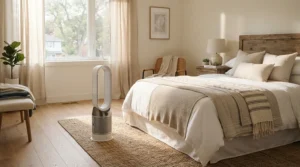
Buying the right machine is only half the job — how you run it determines whether you actually notice a difference. In the first 30 days, resist the urge to run any purifier on its lowest setting constantly; most units, HEPA or PCO, are designed to run harder for the first hour after switching on to clear a backlog of pollutants, then settle into a lower auto mode. Close doors and windows while the unit is actively cleaning, since open windows constantly reintroduce outdoor particulates and undo the work. For HEPA units specifically, check the pre-filter monthly and vacuum or wash it if washable, because a clogged pre-filter starves airflow to the main HEPA layer and quietly tanks performance long before the filter itself is “due” for replacement. For PCO and photocatalytic units, keep the UV lamp and catalyst surface free of dust, since a dirty catalyst simply won’t generate the oxidisers the technology depends on — wipe the accessible surfaces every few weeks per the manufacturer’s instructions. A common early mistake is placing the unit in a corner behind furniture; air purifiers need clear space on at least two sides to draw in and circulate air properly, so give yours breathing room, quite literally.
Real-World Scenarios: Which Buyer Needs Which Technology
Picture three different households. First, a young professional with seasonal hay fever living alone in a one-bedroom flat, budget around £150, mainly worried about pollen drifting in through an open window each spring — a Levoit Core 300S or Blueair Blue Pure 511 covers this comfortably, since the problem is almost entirely particulate. Second, a family of four in a semi-detached house who recently had the kitchen re-fitted and are still noticing a chemical smell from new cabinetry and flooring adhesive months later, alongside a cat that triggers one child’s allergies — here the case for a hybrid leans stronger, because new-build off-gassing is a VOC problem that HEPA alone can’t touch; the Airvia Aero 100 or GermGuardian AC4825 earns its keep specifically for the photocatalytic gas-phase treatment, run alongside good ventilation. Third, a couple who smoke on the balcony but still notice the smell drifting indoors, plus regular fry-ups filling the open-plan kitchen-diner — the Winix 5500-2‘s dedicated carbon stage is the better fit than a PCO-only approach, since activated carbon remains the most consistently effective technology for adsorbing smoke and cooking odours at consumer scale.
Problem → Solution: Fixing the Five Most Common Complaints
Five issues come up again and again in aggregated buyer feedback, and most have a straightforward fix. If the purifier “isn’t doing anything” despite running constantly, check the room size against the unit’s rated coverage first — a Philips Series 800 in a 30-square-metre open-plan room is simply undersized, not faulty. If there’s a persistent chemical smell from a new unit, that’s often the HEPA and carbon media off-gassing manufacturing residue; run it on high in a ventilated room for a few hours before regular use. If allergy symptoms haven’t improved despite a HEPA unit running, the missing piece is usually not the purifier at all but bedding, carpets and soft furnishings holding onto allergens that never reach the air stream — pair the purifier with regular washing at 60°C. If a PCO or UV-C unit seems to have lost effectiveness over time, check the bulb life first, since UV output degrades gradually and most manufacturers recommend replacement annually regardless of visible wear. And if noise is the sticking point at night, run any unit one size category above what your room strictly needs, so it can hit target CADR on a lower, quieter fan speed rather than screaming on maximum.
Filtration vs Oxidation: How PCO and HEPA Actually Clean Your Air
The filtration vs oxidation distinction sounds academic until you picture what each is actually doing at a molecular level. HEPA filtration is a purely physical, mechanical process: air is forced through a dense mat of randomly arranged fibres, and particles get trapped by a mix of interception, impaction and diffusion depending on their size — nothing is chemically altered, it’s simply caught and held, the way a genuinely fine sieve traps flour but lets air pass through. Photocatalytic oxidation works completely differently: UV light activates a titanium dioxide catalyst, which reacts with ambient water vapour to generate hydroxyl radicals and other oxidisers that chemically attack organic molecules, ideally breaking them down into more harmless by-products like carbon dioxide and water. The trouble, according to a peer-reviewed review of PCO air cleaner performance, is that lab-controlled results don’t always hold up in real rooms — as testing scales up to realistic airflow rates and pollutant concentrations, PCO removal efficiency tends to drop noticeably, because contaminants simply don’t spend enough time in contact with the catalyst. That’s the core trade-off: filtration is predictable and easy to verify (you can weigh what’s trapped in a filter), while oxidation’s real-world effectiveness varies far more by design, airflow and maintenance.
How to Choose a Photocatalytic or HEPA Air Purifier
- Identify your actual pollutant first. Dust, pollen and pet dander call for HEPA; smoke, VOCs and chemical odours call for carbon or PCO — most households need a bit of both.
- Match CADR to room size, not the marketing headline. A unit rated for 55 square metres run in a 15-square-metre room will be quieter and more effective than one rated exactly to size.
- Check for a certified True HEPA claim. “HEPA-type” or “HEPA-like” filters aren’t held to the same 99.97%-at-0.3-microns standard as certified True HEPA media.
- Weigh running costs, not just the sticker price. Replacement HEPA filters, carbon cartridges and UV bulbs all add up differently depending on the technology mix.
- Consider noise at the setting you’ll actually use. A unit’s quietest published decibel figure is meaningless if it can’t hit adequate CADR without ramping up.
- Look for independent testing, not just brand claims. Which? and similar UK testing bodies measure real clean-air delivery time rather than relying on manufacturer specs alone.
- Factor in ozone and by-product concerns for PCO units. Poorly designed photocatalytic systems can generate unwanted by-products, so favour reputable brands with published safety data.
PCO Air Purifier for Allergies: Does It Actually Help?
For classic allergy triggers — dust mites, pollen, pet dander, mould spores — a PCO air purifier for allergies is, honestly, not the most direct tool for the job. These are all particulates, and photocatalytic oxidation was designed primarily to dismantle gaseous pollutants and VOCs, not to physically capture solid particles floating through a room. Reviewers consistently note that PCO-only systems struggle with fine particulate removal precisely because the mechanism depends on airborne contaminants making contact with the catalyst surface, which is a much less reliable process for solid particles than simply forcing air through a dense HEPA mat. That’s why every hybrid product worth considering — the GermGuardian AC4825 and Airvia Aero 100 on this list included — pairs its photocatalytic stage with a genuine HEPA filter rather than relying on PCO alone. If allergies are your main concern, prioritise the HEPA certification first and treat any PCO stage as a bonus for gases and odours, not your primary allergy defence.
PCO Air Purifier for Smoke: A Realistic Expectation
Smoke is a genuinely mixed pollutant — fine particulate matter plus a cloud of gaseous VOCs and odour compounds — which is exactly why a PCO air purifier for smoke sounds appealing on paper. The oxidation process can, in theory, break down some of the gaseous compounds responsible for lingering smell in a way pure filtration can’t. In practice, though, the EPA’s own review of the underlying literature found that PCO air cleaners have been shown to generate their own by-products — including formaldehyde and other aldehydes — under certain conditions, which rather undercuts the “cleaner air” pitch if the technology isn’t well engineered. For smoke specifically, the more consistently effective consumer technology remains a dense activated carbon stage, which is why the Winix 5500-2‘s dedicated carbon layer outperforms PCO-only claims in independent smoke-focused testing. If you’re set on photocatalytic technology for smoke, choose a hybrid with substantial carbon media alongside it rather than relying on the PCO stage in isolation.
Effectiveness on Particulates vs Gases: The Real Trade-Off
This is really the crux of the whole photocatalytic air purifier vs HEPA debate. HEPA filtration’s effectiveness on particulates is well-documented and independently testable — you can measure exactly what percentage of 0.3-micron particles a filter traps under standard conditions, which is precisely how the 99.97% figure gets certified. Photocatalytic oxidation’s effectiveness on gases is far murkier territory: a scientific review of PCO air cleaner studies found wide variation in results depending on experimental setup, humidity, airflow rate and initial pollutant concentration, with lab conditions consistently outperforming real-world deployment. Reviewers consistently note that neither HEPA filters nor electrostatic precipitators have any meaningful ability to remove VOCs from the air, which is the gap PCO technology is trying to fill — but the trade-off is that PCO’s particulate performance, on its own, simply doesn’t match a dedicated HEPA stage. The practical upshot: if your household problem is particulate (dust, pollen, dander), lean HEPA; if it’s gaseous (VOCs, chemical odours, off-gassing), a well-designed hybrid with genuine photocatalytic capacity earns its keep, provided it’s paired with proper filtration rather than sold as a standalone solution.
Maintenance Requirements: What Each Technology Actually Costs You
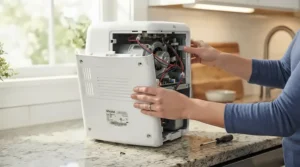
Maintenance requirements differ meaningfully between the two technologies, and this is where a cheap upfront price can quietly become an expensive ongoing one. HEPA filters need full replacement roughly every six to twelve months depending on usage and air quality, with genuine True HEPA cartridges for units like the Levoit Core 300S or Coway Airmega 150 typically costing a modest sum each time — check current pricing before buying, since this varies by retailer. Activated carbon stages, as found in the Winix 5500-2, often need replacing more frequently if you’re running the unit hard against smoke or cooking odours, since carbon becomes saturated with adsorbed compounds over time rather than simply clogging like a mechanical filter. PCO and UV-C hybrids add a third maintenance line: UV bulbs typically need annual replacement regardless of visible wear, because output degrades gradually and invisibly, and the catalyst surface itself benefits from periodic wiping to stay effective. Across the board, pre-filters are the cheapest and most frequent maintenance task — a monthly vacuum or rinse on most units — and skipping this step is the single most common reason people feel their purifier has “stopped working” when really it’s just starved of airflow.
Common Mistakes When Buying an Air Purifier
The single most common mistake is buying based on room square footage alone without checking the unit’s actual clean-air delivery rate, since two purifiers rated for the “same” room size can perform very differently depending on fan power and filter density. A close second is assuming any filter marketed with “HEPA” in the name meets the certified 99.97%-at-0.3-microns standard — “HEPA-type” and “HEPA-like” filters are a real and fairly common downgrade dressed up in familiar language. Buyers also frequently underestimate ongoing filter costs when comparing sticker prices, which can flip a “cheaper” unit into the pricier option over two or three years of ownership. Another recurring pitfall is expecting a PCO-only unit to solve an allergy problem it was never designed for, or conversely expecting a HEPA-only unit to eliminate a persistent chemical smell it has no mechanism to address. Finally, plenty of buyers place their new purifier in a corner or behind furniture for aesthetic reasons, which restricts airflow on multiple sides and can meaningfully cut real-world performance regardless of how good the machine is on paper.
Safety, Regulations and Ozone: What UK Buyers Need to Know
Safety is where photocatalytic technology attracts the most scrutiny, and it’s worth engaging with that honestly rather than glossing over it. A US Environmental Protection Agency review specifically warned against certain photocatalytic and plasma air-cleaning technologies, noting that PCO air cleaners have in some studies been shown to generate unwanted by-products, and that no studies to date have systematically shown gas-phase or PCO air cleaners improve occupant health outcomes in real homes. That doesn’t mean every PCO product is unsafe — reputable manufacturers publish testing data and design their catalyst-and-UV combinations to minimise by-product formation — but it does mean buyers should look for that published safety data rather than taking “chemical-free purification” marketing claims at face value. On the regulatory side, the UK’s NICE guideline on indoor air quality at home emphasises ventilation and pollutant source control as the primary tools for healthier indoor air, treating purifiers as a supplementary measure rather than a substitute for opening a window or fixing a damp problem. If you do opt for a PCO or hybrid unit, avoid anything marketed primarily as an “ozone generator” for odour control, since ozone itself is a recognised lung irritant regardless of the technology producing it.
Frequently Asked Questions
❓ Is a photocatalytic air purifier better than HEPA for allergies?
❓ Do PCO air purifiers produce ozone?
❓ How often do you need to replace a PCO or HEPA filter?
❓ Can a HEPA air purifier remove smoke smell?
❓ Is photocatalytic oxidation safe for pets and children?
Conclusion
There’s no single winner in the photocatalytic air purifier vs HEPA debate, and any article claiming otherwise is oversimplifying a genuinely nuanced technical question. HEPA remains the dependable, independently verifiable choice for particulate allergens — dust, pollen, pet dander — and units like the Levoit Core 300S or Coway Airmega 150 AP-1019C deliver that reliably at sensible prices. Photocatalytic oxidation earns its place when the problem is gaseous rather than solid: persistent VOCs, new-furniture off-gassing, or odours that a filter simply can’t trap, which is where hybrids like the GermGuardian AC4825 and the premium Airvia Aero 100 genuinely differentiate themselves. The honest advice, backed by the EPA’s own caution around standalone PCO technology and echoed throughout independent UK testing from Which?, is to prioritise a certified HEPA stage as your foundation and treat photocatalytic oxidation as a targeted addition for gas-phase problems, not a replacement. Match the technology to the pollutant actually in your home, check the maintenance costs before you buy, and you’ll end up with air that’s genuinely cleaner rather than just marketed as such.
✨ Ready to breathe easier?
Compare today’s prices on any of these seven picks and find the one built for your home. 🏡💨
Recommended for You
- Photocatalytic Air Purifier For VOCs: 7 Honest UK Picks (2026)
- Photocatalytic Air Purifier: 7 Best Picks & Honest Truth (2026)
- HEPA Ioniser Air Purifier Under £200: 7 Best UK Picks (2026)
Disclaimer: This article contains affiliate links. As an Amazon Associate, I earn from qualifying purchases. If you purchase products through these links, we may earn a small commission at no additional cost to you.
✨ Found this helpful? Share it with your friends! 💬🤗
