In This Article
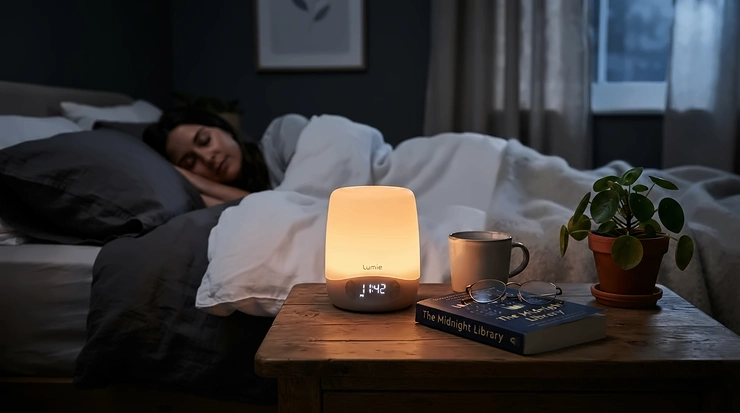
It’s 3 a.m. and the bedroom window is cracked open because the room feels like a greenhouse. Your nose has decided to audition as a tap. If that’s your June, you already know hayfever doesn’t clock off when you come indoors. Pollen rides in on clothes, hair, pets and every open window, then loiters in the air you sleep in.
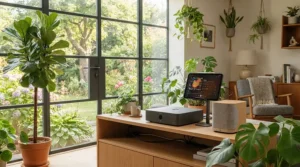
That’s the case for an air purifier for hayfever. It works a night shift on the one room you can actually control. It won’t cure anything, and anyone who says otherwise is selling something. But paired with sensible habits and the right medication, a properly sized HEPA unit can take the edge off a miserable season.
The catch is that choosing one is surprisingly easy to get wrong. Buy too small and the fan wheezes through a room it can’t cope with. Buy on marketing and you pay for gimmicks that do nothing for pollen.
So here’s the plan. We’ve compared seven real models across budgets, using published specifications and the aggregated verdicts of UK review sites. Then we’ve added what Amazon listings skip: sizing maths, placement, running routines and long-term costs. A quick note on method: this is an analysis of specs and published reviews, not a hands-on lab test. Where something couldn’t be verified, we say so.
Quick Comparison: Air Purifier for Hayfever at a Glance
| Product | Headline room claim | Headline CADR | Filtration | Price range | Best For |
|---|---|---|---|---|---|
| IKEA UPPÅTVIND | ~7 m² | 31–95 m³/h | EPA12 particle filter | Under £40 | Tiny rooms, tight budgets |
| Levoit Core 300S | ~20 m² at ~4.8 air changes/hr | 240 m³/h | 3-stage True HEPA | £120–£160 | Bedrooms, smart sensing |
| Blueair Blue Max 3250i | Up to 48 m² | 239 m³/h | HEPASilent + carbon | £120–£170 | Quiet all-round use |
| MeacoClean CA-HEPA 76×5 | Check listing | 380 m³/h (stated) | HEPA + charcoal | £195–£230 | Allergy-focused UK buyers |
| Shark NeverChange5 | Up to 60 m² (1 change/hr) | 99–147 m³/h (sources differ) | HEPA | £170–£280 | Low filter-change fuss |
| Philips 3000i Series AC3033/30 | Up to 135 m² (claimed) | 520 m³/h (Philips figure) | HEPA + carbon | £270–£450 | Large rooms, air data |
| Dyson HushJet Compact HJ10 | Up to 100 m² (claimed) | Not verified | Electrostatic + carbon | £330–£350 | Design-led, long filter life |
Looking at the comparison above, the Blueair Blue Max 3250i and Levoit Core 300S sit in the sweet spot for most bedrooms, delivering similar headline airflow at a sensible price. If you’re covering an open-plan space, the Philips 3000i Series AC3033/30 is in another league on paper, though you pay for it. Budget buyers should note that the IKEA UPPÅTVIND only suits genuinely small rooms.
💬 Just one click — help others make better buying decisions too!😊
What Is an Air Purifier for Hayfever?
An air purifier for hayfever is a portable appliance that pulls room air through a HEPA-grade filter to trap airborne pollen and other allergens, then returns cleaner air. It won’t cure hayfever, but by reducing pollen indoors, especially in the bedroom, it can ease symptoms alongside medication and good habits.
The medical backdrop matters here. According to the NHS guidance on hay fever, it’s an allergic reaction to pollen that is usually worse between late March and September, particularly when it’s warm, humid and windy. There’s no cure and no way to prevent it, which is exactly why reducing your exposure at home is such a sensible lever to pull.
Pollen grains are fairly big (roughly 15–100 microns, according to Ideal Home), so a decent HEPA filter catches them with ease. The real question is airflow: how fast does the machine cycle your room’s air? That’s where specs like CADR come in, and where most buying mistakes begin.
Top 7 Air Purifier for Hayfever Picks: Expert Analysis
1. IKEA UPPÅTVIND — cheapest entry point for a box room
Think of the IKEA UPPÅTVIND as the sensible trainer in a world of designer sneakers. It’s tiny, handled and absurdly cheap.
IKEA optimises it for rooms of about 7 m², where it filters the air roughly five times an hour. CADR runs from 31 m³/h on low to 95 m³/h on high, using an EPA12 particle filter. In practice that means a small box room or a child’s single-bed bedroom, not a living room. Weighing around 1.7 kg, it moves easily between rooms.
Based on the spec comparison, this is a “small room, low expectations, lower price” machine. Air Purifier First found it among the quietest units they’d tested, though it uses neither a True HEPA filter nor activated carbon. Reviewers broadly call it a decent buy for the money, and the common caveat is its limited coverage. CHOICE lists a six-month filter interval, so budget for replacements.
Pros:
- ✅ Extremely low purchase price
- ✅ Very quiet in testing
- ✅ Portable with a carry handle
Cons:
- ❌ Suits only very small rooms
- ❌ No True HEPA or carbon layer
Price: under £40. Verdict: a low-risk first purifier for a tiny bedroom, but outgrown quickly.

2. Levoit Core 300S — smart sensing without the premium price
The Levoit Core 300S is the “does most things well” option, and it earns that reputation through sensible engineering rather than gimmicks.
It delivers a CADR of 240 m³/h through a three-stage True HEPA system, with a laser PM2.5 sensor and app control via VeSync. One retailer lists coverage of 50 m² at one air change an hour. But if you want roughly 4.8 changes an hour, which Levoit’s own specialist recommends for pollen households, think about 20 m². That’s a typical double bedroom. Retailer listings put sleep mode at around 22 dB with the display dimmed.
Trusted Reviews found it quiet and reasonably powerful, with PM2.5 sensing that most budget units lack. They noted the 240 m³/h figure isn’t huge, so it’s not ideal for big rooms. In their smoke test it brought particulates back to “moderate” in about 12 minutes. Plan on a filter swap every six to eight months.
Pros:
- ✅ Genuine True HEPA in a compact body
- ✅ PM2.5 sensor with auto mode
- ✅ Very quiet sleep mode
Cons:
- ❌ Not powerful enough for big rooms
- ❌ Filters need replacing twice yearly
Price: £120–£160. Verdict: excellent value for a bedroom.
3. Blueair Blue Max 3250i — quietest all-rounder for bedrooms
If silence is the brief, the Blueair Blue Max 3250i is hard to ignore.
Blueair quotes a 239 m³/h CADR for pollen, dust and smoke alike, enough for 20 m² in 12.5 minutes or up to 48 m² in 30 minutes. Noise ranges from 18 dB on low to 46 dB at maximum. Its HEPASilent technology combines electrostatic and mechanical filtration, with an activated carbon layer for odours. Blueair claims it captures 99.97% of particles down to 0.1 micron.
What matters for hayfever is the combination of decent airflow and low noise. A purifier you can leave running overnight is one you’ll actually use. Expert Reviews rated it effective for medium and larger spaces, while Ideal Home called it a brilliant all-rounder, citing quiet running and responsive performance. The app also schedules on/off times and reports filter health.
Pros:
- ✅ Very quiet from 18 dB upwards
- ✅ Scheduling, auto mode and voice control
- ✅ Stylish, compact design
Cons:
- ❌ Modest airflow for open-plan rooms
- ❌ Genuine replacement filters add ongoing cost
Price: £120–£170. Verdict: a strong bedroom choice for light sleepers.
4. MeacoClean CA-HEPA 76×5 — British-designed with allergies in mind
British brand Meaco has built its purifier range around allergy sufferers, and the MeacoClean CA-HEPA 76×5 is its Wi-Fi flagship in the mid-range.
Woman & Home lists a stated CADR of 380 m³/h, far above the 240 m³/h of its peers. That implies a room of roughly 33 m² at about 4.8 changes an hour, based on our own sizing maths. A single combined filter covers pre-filter, HEPA and carbon layers, and needs replacing after 2,200 hours of use. That’s roughly three months of round-the-clock running, or much longer with normal daily use. Meaco calculates running costs at about 2p an hour.
TechRadar called it particularly good for airborne allergies and noted a noticeable difference after a hot spell with windows open. Woman & Home’s one gripe was its plain looks. Meaco says its 47×5 and 119×5 models carry Allergy UK’s seal of approval, but we couldn’t verify that for the 76×5, so check before buying.
Pros:
- ✅ High stated CADR for the price
- ✅ Smart app and air quality sensor
- ✅ Low running costs
Cons:
- ❌ Plain styling won’t suit everyone
- ❌ Combined filter must be replaced whole
Price: £195–£230. Verdict: great value for medium rooms.
5. Shark NeverChange5 — five-year filter claim cuts running costs
The Shark NeverChange5 takes aim at the most annoying part of owning a purifier: filter shopping.
Shark claims a washable pre-filter system protects the HEPA layer, so the filter lasts up to five years. That claim is based on testing at maximum speed for 12 hours daily in a 12 m² space. It covers 60 m² at one air change an hour, or about 12 m² at 4.8 changes, which makes it best as a bedroom unit. CADR is listed at 99 m³/h by Expert Reviews but 147 m³/h by some UK retailers, so check the listing.
Expert Reviews called it a very effective purifier, but admitted they couldn’t verify the five-year claim in a week of testing. TechRadar noted there’s no app, no carry handle, and the filter monitor didn’t seem reliable. It also has an optional fragrance system, which may not suit scent-sensitive hayfever sufferers.
Pros:
- ✅ Up to five years between HEPA changes
- ✅ Remote control and auto mode
- ✅ Easy-to-read LED display
Cons:
- ❌ No app and no carry handle
- ❌ Five-year claim hard to verify
Price: £170–£280. Verdict: ideal if you hate buying filters, but treat the longevity claim cautiously.
6. Philips 3000i Series AC3033/30 — big-room muscle with detailed air data
For large or open-plan spaces, the Philips 3000i Series AC3033/30 is the heavyweight here.
Philips quotes a 520 m³/h CADR (tested to the Chinese GB/T standard, which can read higher than AHAM figures) and coverage of up to 135 m². The UK model code is AC3033/30, and Ideal Home covers that version. HEPA and carbon filters pair with sensors reporting PM2.5, gases and allergens on a clear display. It weighs about 10 kg and draws 55 W, so it’s more of a fixture than a portable.
Ideal Home’s air purifier expert awarded it 4.5 stars, praising the depth of air quality data. NextPit found distribution excellent but called it overkill for a 54 m² flat. A German test magazine scored the sister AC3033/10 at 93%. At maximum speed it reaches about 56 dB.
Pros:
- ✅ Huge claimed airflow for big rooms
- ✅ Detailed PM2.5, gas and allergen readouts
- ✅ HEPA plus carbon filtration
Cons:
- ❌ Heavy at around 10 kg
- ❌ Premium list price
Price: £270–£450 (RRP around £450, frequently discounted). Verdict: worth it only if your room is genuinely large.
7. Dyson HushJet Compact HJ10 — quiet jet projection with a long filter claim
The Dyson HushJet Compact HJ10 is the design-led pick, and it comes with Dyson’s premium personality.
A star-shaped nozzle projects purified air around the room, using a jet-engine-inspired airflow Dyson says reduces turbulence and noise. The electrostatic filter captures 99.97% of particles down to 0.3 microns, and Dyson claims a five-year life for it based on 12 hours daily use. The activated carbon layer is a one-year item. It draws just 19 W and works with the MyDyson app and voice assistants.
Dyson says it covers up to 100 m², but cites testing in an 81 m³ room, and other sources suggest much smaller recommended spaces. Treat the largest figure as a ceiling, not a promise. We couldn’t verify a published CADR. The John Lewis listing averaged 4.5 out of 5 across 176 reviews at the time of research.
Pros:
- ✅ Fully sealed filtration design
- ✅ Long electrostatic filter life claimed
- ✅ Slim, space-saving footprint
Cons:
- ❌ Premium price for the airflow
- ❌ Coverage claims vary widely
Price: £330–£350. Verdict: for buyers who value design and low noise over raw value.
Air Purifier for Hayfever Reviews: What the Experts Agree On
Read enough air purifier for hayfever reviews and a pattern emerges. The same four ideas appear again and again, whether the source is Which?, Ideal Home, Expert Reviews or TechRadar.
First, HEPA matters. Meaco’s managing director told Ideal Home that pollen is a fine powder, and not every purifier is built to trap it, so you want a genuine HEPA filter. Second, size matters more than brand. Which? tests how quickly purifiers trap allergens at different particle sizes and how noisy they are, and warns the worst models are poor and loud. Third, a purifier only cleans air passing through it. TechRadar’s advice is blunt: it isn’t a miracle cure and won’t remove pollen from surfaces. Fourth, consistency wins. Reviewers recommend running units continuously through the season.
User-review sentiment is harder to pin down. A July 2026 Mumsnet thread shows one parent reporting fewer problems after buying a Blueair unit, while admitting it’s impossible to separate that from changing pollen levels. That honesty is useful. Anecdotes are encouraging, not proof, so weigh them against specifications and independent testing.
How to Choose an Air Purifier for Hayfever
Here are seven steps, in order of importance.
- Measure your room. Multiply floor area by ceiling height (usually about 2.4 m) to get volume in cubic metres.
- Use the CADR rule. Divide a unit’s CADR by 4.8 to find the maximum room volume it handles at the recommended pollen-household rate. A 240 m³/h unit suits roughly 50 m³, or about 20 m².
- Insist on HEPA-grade filtration. Pollen is large, but HEPA also catches finer allergens like dust mite debris.
- Prioritise noise for bedrooms. A unit under 25 dB on its sleep setting is one you’ll leave running.
- Look for auto mode. A PM2.5 sensor ramps power up during dusty spells and down when air is clean.
- Price the filters. A cheap machine with expensive annual filters can cost more over three years.
- Check independent approval. Allergy UK’s seal is one useful signal, but verify it for the exact model.
Skip features like ionisers or scent cartridges unless you want them. They don’t address pollen, and fragrance can irritate sensitive airways.
Pollen Count: When to Run Your Purifier
Understanding the pollen count turns a passive appliance into a proper strategy. The Met Office ranks UK pollen as low, moderate, high or very high, and its pollen forecast is issued several days ahead. That gives you time to prepare, since high-count spells are when a purifier earns its keep.
Timing varies by plant. According to Allergy UK, quoted in regional press, tree pollen peaks from February to June, grass from May to July, and weed pollen from June to September. Levels are typically highest early in the morning and again as the air cools in the evening.
Practically, that suggests three habits. Check the forecast each morning, then keep windows shut during peak hours. Run the purifier on a higher setting before bed so the room starts clean. And leave it running continuously on auto through the season, as TechRadar’s expert advises. Ideal Home suggests a quality unit should start helping within about 30 minutes, so switching on before you walk in is smarter than reacting once you’re sneezing.
Air Purifier for Pollen Allergy: Placement and Setup Guide
Where you put an air purifier for pollen allergy matters almost as much as which one you buy. Blueair’s technology head says to prioritise rooms where you spend the most time, usually the bedroom and living room.
Bedroom setup. Place the unit one to two metres from the bed, with airflow unobstructed, and a hand’s width from walls and curtains. Avoid tucking it in a corner behind furniture. Start it an hour before bedtime on high, then switch to sleep mode or auto.
First-week routine. Wash the pre-filter if your model has one, and note when the filter-life indicator first appears. Close windows during peak pollen hours and ventilate briefly at lunchtime instead.
Common first-month mistakes:
- Running it only when symptoms flare rather than continuously
- Placing it where bedding or furniture blocks the intake
- Ignoring filter alerts until airflow drops
- Forgetting to run it after vacuuming or dusting, which stirs up settled allergens
Treat the purifier as one part of a system. Showering and changing clothes after being outdoors, as recommended by the NHS, cuts what’s carried indoors in the first place.
Pollen Filter Mesh vs Air Purifiers: Which Wins?
A pollen filter mesh is a fine screen fitted over open windows to block pollen while letting air through. Forum users in the same Mumsnet thread pointed to made-to-measure window pollen screens as a complement to purifiers. The two tackle different jobs: mesh stops pollen at the door, while a purifier cleans what sneaks past.
| Approach | What it does | Limitation | Best For |
|---|---|---|---|
| Closing windows | Cuts incoming pollen | Stuffy in hot weather | Short high-pollen spells |
| Pollen filter mesh | Filters air through open windows | Doesn’t clean air already inside | Households who want ventilation |
| HEPA vacuum | Removes settled pollen from surfaces | Can’t clean airborne pollen | Weekly home maintenance |
| Air purifier | Continuously cleans room air | Only treats air passing through it | Bedrooms, allergy-heavy homes |
Analysis: no single measure covers everything. The mesh solves the “I want fresh air” problem, the vacuum handles surfaces, and the purifier mops up airborne particles. The NHS also suggests a pollen filter for car vents and a HEPA vacuum, so the combined approach is mainstream advice rather than a niche hack. For most households, a purifier plus basic habits delivers the most benefit per pound.
💬 Just one click — help others make better buying decisions too!😊

Seasonal Allergic Rhinitis: What an Air Purifier Can and Can’t Do
Seasonal allergic rhinitis is the clinical name for hayfever. According to NICE’s clinical knowledge summary on allergic rhinitis, it’s the same family of conditions as year-round (perennial) rhinitis, which is triggered by indoor allergens like dust mites, pets and mould. An NHS Dorset leaflet puts it affecting around one in five people in the UK.
Here’s the honest division of labour. A purifier can cut the airborne allergen load in a room, which may reduce how hard your immune system reacts. It can’t treat the reaction itself. Antihistamines, nasal sprays and, for some people, immunotherapy do that, and a pharmacist or GP can advise on them. The NHS notes immunotherapy usually starts a few months before the season begins.
If you also have asthma, hayfever can worsen it. NHS Greater Manchester advises asthmatics to keep their reliever inhaler to hand during high pollen spells. A purifier is a supportive layer in that picture, not a replacement for medical advice. If symptoms persist despite over-the-counter treatment, see your GP.
Real-World Scenarios: Which Purifier Fits Which Home?
The student in a rented 12 m² room. Budget is £150, hayfever hits hard in May, and noise matters during exam revision. The Levoit Core 300S sits comfortably within budget, handles the room at a high air-change rate, and its sleep mode won’t wake flatmates. Run it daily from April through September.
The family with a hayfever-prone child. Four-bed semi, 12 m² child’s bedroom, plus a 25 m² living room. Here the Blueair Blue Max 3250i in the bedroom makes sense, thanks to its low noise and scheduling. It could start every evening at 6 p.m. so the room is clean by bedtime. A second unit for the lounge is optional.
The open-plan flat owner. A 45 m² living-kitchen-diner with windows that stay open in summer. A small unit would struggle. The Philips 3000i Series AC3033/30 matches the room on paper, and the MeacoClean CA-HEPA 76×5 is a cheaper option if you can accept lower coverage and run it harder. In both cases, run on auto during the pollen season and keep windows closed during peak hours.
Hayfever Problem and Solution Guide
Problem: waking up congested. Pollen settles in bedding and hair. Solution: shower before bed, change pillowcases weekly, and run the purifier for an hour before sleep.
Problem: the room is too big for one unit. A single compact purifier in an open-plan room cycles too slowly. Solution: choose a higher CADR such as the Philips 3000i or MeacoClean CA-HEPA 76×5, or use two smaller units.
Problem: fan noise disturbs sleep. Solution: oversize slightly, then run on a lower setting. A Blueair Blue Max 3250i at 18 dB is rarely noticeable, and it can cycle air without waking you.
Problem: symptoms spike after cleaning. Dusting and vacuuming throw settled particles back into the air. Solution: run the purifier on high during and after, as TechRadar’s expert recommends, and use a HEPA vacuum as the NHS suggests.
Problem: windows must stay open for heat. Solution: fit a pollen filter mesh to key windows and keep the purifier on auto.
Long-Term Cost and Maintenance
Purchase price is only chapter one. Running costs and filters are the sequel.
On electricity, the maths is friendly. A 20 W unit like the Blueair Blue Max 3250i uses 0.02 kWh per hour, which at 34p per kWh is under 1p an hour, and at most about 16p a day if run flat-out around the clock. Meaco quotes about 2p an hour for the MeacoClean CA-HEPA 76×5 at the same tariff.
Filters are the bigger variable. The Levoit Core 300S needs replacing every six to eight months, and the IKEA UPPÅTVIND about every six months. The MeacoClean CA-HEPA 76×5 lasts 2,200 hours. The Shark NeverChange5 and Dyson HushJet Compact HJ10 advertise multi-year filters, but Expert Reviews couldn’t verify Shark’s claim, and Dyson’s carbon layer still needs yearly replacement.
Total cost of ownership over three years is therefore a mix of sticker price, filters and electricity. A £130 machine with two filters a year can overtake a £250 machine with long-life filters. Check replacement filter prices before you commit, and note them in your calendar when the unit arrives.
FAQ
❓ How long should I run an air purifier for hayfever each day?
❓ Where should I put an air purifier in the bedroom?
❓ Is HEPA enough, or do I need a carbon filter too?
❓ Can an air purifier replace antihistamines?
❓ Do I need an air purifier in every room?
Conclusion: Choosing the Right Air Purifier for Hayfever
Hayfever season isn’t going anywhere, but your bedroom doesn’t have to be a pollen waiting room. The right air purifier for hayfever won’t cure anything. What it will do is reduce the airborne load in the room where you most need relief, as part of a wider routine of medication, showers, closed windows and sensible cleaning.
If you want one shortlist, here it is. For a tiny room on a tight budget, the IKEA UPPÅTVIND is a low-risk starter. For most bedrooms, the Levoit Core 300S and Blueair Blue Max 3250i offer the best balance of airflow, noise and cost. The MeacoClean CA-HEPA 76×5 adds muscle and a British allergy focus, while the Shark NeverChange5 appeals if filter hassle bugs you. Large spaces call for the Philips 3000i Series AC3033/30, and the Dyson HushJet Compact HJ10 suits those who value design and low noise.
Match the CADR to your room, price the filters, and run the thing consistently. Do that and next June might feel a lot less like an audition for the tap.💨
Recommended for You
- Air Purifier For Allergies And Asthma: 7 Best UK Picks (2026)
- Air Purifier For Allergy Sufferers Under £150: 7 UK Picks (2026)
- Air Purifier For Allergies: 7 Proven Picks For 2026
Disclaimer: This article contains affiliate links. As an Amazon Associate, I earn from qualifying purchases. If you purchase products through these links, we may earn a small commission at no additional cost to you.
✨ Found this helpful? Share it with your friends! 💬🤗
