
In This Article
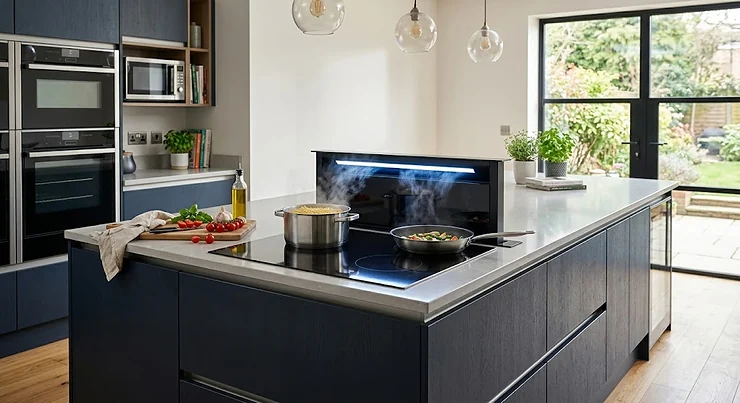
If you’ve ever stood in a rental flat or a newly knocked-through open-plan kitchen wondering why there’s a hole in the ceiling where a hood used to be, you’re not alone. A cooker hood alternative is any device or system that removes smoke, steam and cooking odours from a kitchen without relying on a traditional ducted extractor hood — think carbon-filter air purifiers, recirculating hoods, or portable extraction units. For thousands of UK homeowners, particularly those in listed buildings, flats above ground floor, or kitchen islands set well away from an outside wall, ducting simply isn’t practical. Structural surveys, leasehold restrictions and the sheer cost of running ductwork through two floors can turn a simple hob upgrade into a five-figure headache.
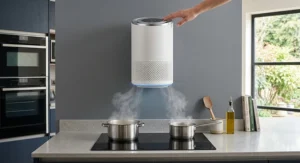
The good news is that a cooker hood alternative doesn’t have to mean choking on last night’s fried onions. Modern activated-carbon air purifiers and cleverly engineered recirculating hoods have closed much of the gap on extraction performance, and in smaller or open-plan kitchens they can genuinely hold their own. Before you spend a penny, though, it’s worth understanding how UK ventilation building regulations treat kitchens, because “no extraction” doesn’t mean “no rules.” Over the next few thousand words, we’ll walk through seven real, currently available products spanning budget to premium, explain honestly what each one can and can’t do, and show you exactly how to match a solution to your kitchen — whether that’s a compact flat, a family kitchen-diner, or a sprawling island unit with nowhere to run a duct.
Quick Comparison Table
Before diving into full reviews, here’s a snapshot of how our seven picks stack up. This isn’t the whole story — CADR (Clean Air Delivery Rate) figures only tell you how fast a unit shifts particles, not how well it handles hot grease-laden steam — but it’s a useful starting point for narrowing things down by budget and kitchen type.
| Product | Type | Best For | Price Range |
|---|---|---|---|
| Levoit Core 300S | Portable air purifier | Compact kitchens & renters | Around £100-£140 |
| WINIX 5500-2 | Portable air purifier | Open-plan kitchen-diners | £150-£200 range |
| Blueair Blue Max 3250i | Smart air purifier | Allergy-conscious households | £300-£400 range |
| CIARRA CBCB4850 Island Hood | Recirculating cooker hood | Kitchen islands | Mid-£300s to £500 range |
A quick read of this table tells its own story: portable air purifiers dominate the budget and mid-range end, while the only true recirculating cooker hood on our shortlist sits at the premium end because it’s solving a harder problem — capturing grease and steam at source, not just cleaning ambient air. If your kitchen has a hob island with genuinely nowhere for ductwork to go, the CIARRA CBCB4850 Island Hood is worth the extra outlay; if you’re dealing with lingering smells in a small galley kitchen, the Levoit Core 300S will likely do the job for a fraction of the cost.
💬 Already leaning towards one? Scroll down to see the full breakdown and check today’s availability.
Top 7 Cooker Hood Alternatives: Expert Analysis
We’ve deliberately mixed portable HEPA-and-carbon air purifiers with one genuine recirculating hood, because “cooker hood alternative” means different things depending on your kitchen layout. Here’s the honest breakdown of each.
1. Levoit Core 300S — best all-round pick for compact kitchens
The standout feature here is the three-stage filtration stack doing a genuinely capable job in a body barely bigger than a bin. Inside you’ll find a nylon pre-filter, a true HEPA filter, and a pelleted activated-carbon layer specifically aimed at gases and odours rather than just particles — which matters enormously in a kitchen, where the real nuisance is smell, not dust. Independent testing has clocked it clearing a room of airborne particles in around 32 minutes, and it’s rated to cover roughly 20 square metres, which suits a typical small-to-medium UK kitchen well.
Based on the spec comparison with rivals at this price point, what stands out is the VeSync app integration, letting you schedule the unit to kick in before you start frying rather than after the smoke alarm’s gone off. Reviewers consistently report that it’s one of the quieter units in its class on lower settings, though several note the carbon filter needs replacing more frequently than advertised if you cook daily with strong spices or oils — a fair trade-off given the compact size. This is best suited to renters, studio kitchens, or anyone testing the waters with a cooker hood alternative before committing to anything more permanent.
Pros:
- ✅ Compact footprint fits tight kitchen counters easily
- ✅ App scheduling lets you pre-empt cooking smells
- ✅ Genuinely quiet on lower fan speeds
Cons:
- ❌ Carbon filter needs frequent replacement with heavy cooking
- ❌ Limited coverage for larger open-plan spaces
At around £100-£140, the Levoit Core 300S represents strong value for anyone whose main problem is lingering odour rather than heavy grease and steam.

2. Russell Hobbs RHAP1032WDB — best budget UK-brand option
The standout feature on this one is simply the price point paired with a recognisable British household name, which matters to buyers wary of unfamiliar Chinese import brands cluttering Amazon’s air purifier listings. It combines a HEPA filter rated to capture the vast majority of airborne particles with a carbon layer for odour control, wrapped in a compact Scandi-style wood-effect housing that doesn’t look out of place on a kitchen worktop.
What most buyers overlook about entry-level units like this is that a lower CADR rating (around 100 m³/h) isn’t necessarily a dealbreaker — it just means the unit needs to run continuously rather than being switched on reactively. Aggregated review sentiment suggests owners are generally happy with build quality and the clear LED display for monitoring filter life, though several mention the aroma sponge feature is a nice-to-have rather than essential, and that noticeable odour reduction takes longer than pricier alternatives. For a first-time buyer wanting a no-fuss backup to natural ventilation, or a secondary unit for a small utility kitchen, it’s a sensible, low-risk starting point.
Pros:
- ✅ Recognisable UK brand with accessible customer support
- ✅ Compact, unobtrusive worktop design
- ✅ Clear filter-life display takes the guesswork out
Cons:
- ❌ Lower CADR means slower odour clearance
- ❌ Best suited to small rooms only, not open-plan spaces
Typically priced under £100, the Russell Hobbs RHAP1032WDB suits anyone wanting a trusted, affordable entry point into kitchen air purification.
3. WINIX 5500-2 — best mid-range all-rounder for open-plan kitchens
The headline feature is a genuinely strong CADR of around 390 m³/h, putting it well ahead of entry-level units when it comes to shifting a real volume of smoky, steamy air quickly — a meaningful advantage in the open-plan kitchen-diners that have become the default in so many UK new-builds. The activated carbon filter is a specific strength here, consistently singled out in performance testing for handling stubborn cooking odours rather than just fresh-air dust.
The spec sheet won’t tell you this, but user reports suggest the built-in PlasmaWave ionising function is worth switching off for most kitchen use, since some sensitive users report a faint metallic smell from ionisers running continuously near food prep areas — thankfully it’s a toggleable extra, not baked into core performance. Reviewers on independent test sites consistently rate it among the best value units for rooms up to around 35 square metres, which covers most kitchen-diner combinations in a typical three-bed semi. This is the pick for households who cook daily, have an open-plan layout, and don’t want to spend premium-tier money.
Pros:
- ✅ Strong CADR handles larger open-plan spaces
- ✅ Smart auto-sensor reacts to cooking in real time
- ✅ Excellent value for the performance on offer
Cons:
- ❌ Optional ioniser best switched off near food prep
- ❌ Bulkier footprint than entry-level countertop units
In the £150-£200 range, the WINIX 5500-2 is arguably the sweet spot for anyone serious about tackling cooking smells in a larger kitchen without paying premium prices.
4. Philips Series 900 AC0951/13 — best mid-premium pick for allergy-conscious households
What stands out immediately is the NanoProtect HEPA filter paired with a dedicated activated carbon layer, delivering a CADR of around 250 m³/h rated for spaces up to roughly 65 square metres — genuinely generous coverage for the price bracket. Philips has built its reputation on quiet, energy-efficient operation, and this model continues that trend with app-based monitoring that shows real-time particulate readings rather than a vague traffic-light indicator.
Based on the spec comparison with the WINIX and Levoit models above, what most buyers overlook is that Philips’ NanoProtect filtration is specifically validated against allergens as well as odours, making it a strong dual-purpose choice for households managing asthma or hay fever alongside kitchen smells. Reviewers consistently note the app is genuinely useful rather than a gimmick, giving a live picture of air quality that updates as soon as the hob goes on. The trade-off is a step up in price versus the WINIX, and a few users mention the replacement filters aren’t the cheapest to keep buying. For anyone weighing up cooking odour control against genuine allergy management, this is where the numbers stack up best.
Pros:
- ✅ Excellent HEPA performance validated for allergens
- ✅ Genuinely useful real-time air quality app
- ✅ Energy-efficient, whisper-quiet operation
Cons:
- ❌ Replacement filters carry a premium cost
- ❌ Pricier than comparable-CADR competitors
Sitting in the £200-£300 range, the Philips Series 900 AC0951/13 earns its keep in households where allergy relief matters as much as odour control.
5. Blueair Blue Max 3250i — best smart premium pick for style-conscious kitchens
The standout feature is Blueair’s HEPASilent combination filter technology, which pairs mechanical filtration with an electrostatic charge to trap ultrafine particles down to 0.1 microns — smaller than the 0.3-micron threshold most HEPA filters are tested against. In independent kitchen-specific testing, this model has been singled out as one of the fastest units at detecting dips in air quality and restoring it, including notably strong odour removal in cooking-smoke trials.
Here’s what to weigh before committing to the premium end: the WiFi-enabled smart features (Alexa and Google Assistant compatible, full app control) genuinely add convenience rather than being tacked-on marketing, letting you set the unit running from your phone the moment you leave for the shops to buy dinner ingredients. Reviewers consistently praise the digital display and app data as being some of the clearest on the market, though it’s worth noting this unit is designed more for medium-sized rooms than sprawling open-plan spaces — for anything bigger, you’d be looking at Blueair’s larger Blue Pure range instead. If you want the closest thing to genuinely smart, near-silent kitchen air management, this is the one to beat.
Pros:
- ✅ Ultrafine particle capture below standard HEPA threshold
- ✅ Strong, independently tested odour removal performance
- ✅ Genuinely useful app and smart-assistant integration
Cons:
- ❌ Not sized for very large open-plan kitchens
- ❌ Premium price bracket versus mid-range rivals
Expect a £300-£400 range for the Blueair Blue Max 3250i, positioning it as the smart-home-friendly premium choice.

6. Coway Airmega 100 — best for households doing heavy daily cooking
The headline spec is a claimed 99.999% particle removal rate down to 0.01 microns, alongside a genuinely capable CADR of around 244 m³/h — numbers that place it firmly among the most thoroughly tested air purifiers on the market, with Coway’s AP-1512HH sibling model a long-standing favourite of independent reviewers going back years. In practice, that translates into a unit that copes well with the sustained assault of daily frying, roasting and grilling rather than just occasional toast-related mishaps.
What most buyers overlook about Coway units specifically is that the ioniser function ships switched off by default, unlike some rivals — a small but meaningful detail for anyone wary of ozone byproducts near food preparation areas. Aggregated review sentiment across several independent testing sites consistently ranks Coway’s filtration reliability and quiet sleep-mode operation among the best in class, with particular praise for how quickly it clears a smoke-filled room in side-by-side trials. The trade-off, as with most Coway units, is a relatively utilitarian design and the absence of a companion smartphone app on this particular model. For a household that cooks from scratch most days and wants genuinely reliable performance over flashy extras, it’s hard to beat.
Pros:
- ✅ Outstanding particle removal even at higher speeds
- ✅ Ioniser off by default, appealing near food prep
- ✅ Consistently strong reliability ratings from owners
Cons:
- ❌ No smartphone app on this specific model
- ❌ Fairly plain, function-over-form design
Priced in the £300-£400 range, the Coway Airmega 100 rewards households prioritising raw filtration performance over smart bells and whistles.
7. CIARRA CBCB4850 Island Hood — best hybrid solution for kitchen islands
Unlike every other entry on this list, the standout feature here is that it’s a genuine recirculating cooker hood rather than a standalone air purifier, specifically engineered for ceiling-mounted installation above kitchen islands where running ductwork simply isn’t feasible. It draws cooking fumes upward through a 360-degree capture design, passes them through a grease filter and an activated carbon filter, and returns clean air to the room — combining a rated extraction figure of around 700 m³/h with WiFi app control and four speed settings including a booster mode.
Key specs translate into real-world meaning here: 700 m³/h of recirculating airflow is genuinely competitive with many entry-level ducted hoods, meaning you’re not sacrificing as much extraction power as you might assume by going ductless. Based on the spec comparison with portable air purifiers, the crucial difference is that this unit captures fumes directly above the hob before they disperse into the room, rather than waiting for smoke to spread and then cleaning it after the fact — a meaningfully different approach for anyone doing serious pan-frying or wok cooking. Aggregated customer feedback highlights that installation and fit are generally straightforward, though a recurring theme in reviews is that the carbon filters need replacing every two to four months with regular use, and a minority of buyers have reported sizing mismatches when ordering replacement filters, so double-checking your exact model number matters. For anyone whose kitchen island genuinely has no route to an outside wall, this is the closest like-for-like swap for a traditional ducted hood.
Pros:
- ✅ Captures fumes at source rather than after dispersal
- ✅ Competitive 700 m³/h airflow for a ductless design
- ✅ WiFi app control with four speeds plus booster
Cons:
- ❌ Carbon filters need replacing every 2-4 months
- ❌ Replacement filter sizing can vary between models
Sitting in the mid-£300s to £500 range depending on finish, the CIARRA CBCB4850 Island Hood is the standout pick for anyone specifically needing an island-mounted cooker hood alternative.
Comparison of All 7 Products
| # | Product | Filtration | Coverage/Airflow | Price Range | Best For |
|---|---|---|---|---|---|
| 1 | Levoit Core 300S | HEPA + carbon | ~20m² | £100-£140 | Compact kitchens |
| 2 | Russell Hobbs RHAP1032WDB | HEPA + carbon | ~100 m³/h CADR | Under £100 | Budget buyers |
| 3 | WINIX 5500-2 | HEPA + carbon + ioniser | ~390 m³/h CADR | £150-£200 | Open-plan kitchens |
| 4 | Philips Series 900 | NanoProtect HEPA + carbon | ~65m² / 250 m³/h | £200-£300 | Allergy sufferers |
| 5 | Blueair Blue Max 3250i | HEPASilent + carbon | Medium rooms | £300-£400 | Smart-home users |
| 6 | Coway Airmega 100 | HEPA + carbon | ~244 m³/h CADR | £300-£400 | Heavy daily cooking |
| 7 | CIARRA CBCB4850 | Grease + carbon (recirculating hood) | ~700 m³/h | Mid-£300s-£500 | Kitchen islands |
Looking at the full line-up, a clear pattern emerges: airborne particle and odour capture scales fairly predictably with price, but the CIARRA CBCB4850 stands apart because it’s solving a fundamentally different problem — fume capture at source rather than ambient air cleaning. If your main frustration is smell drifting through an open-plan living space, the WINIX 5500-2 or Philips Series 900 offer the best middle ground. If you’re dealing with heavy grease from regular frying above a genuinely vent-free island, only the CIARRA CBCB4850 replicates what a ducted hood actually does.
✨ Ready to compare live prices and availability? Check today’s listings before they change.
Setting Up and Maintaining Your Cooker Hood Alternative
Buying the right unit is only half the job — how you set it up in the first 30 days makes a genuine difference to performance. Start by positioning any portable air purifier as close to the hob as practically possible, ideally within two to three feet, since particle capture drops off sharply with distance and a unit tucked in a corner across the room is working far harder for far less benefit. Keep at least two inches of clearance around the intake and outlet vents; a purifier wedged against a wall or under overhanging cupboards will recirculate its own exhaust rather than pulling in fresh, polluted air.
Switch the unit on before you start cooking rather than after, if it doesn’t have an automatic air-quality sensor — most of the pollutant load happens in the first few minutes of frying or grilling, and a purifier playing catch-up after the fact is fighting an uphill battle. For recirculating hoods like the CIARRA island unit, make sure the grease filter is cleaned monthly (most are dishwasher-safe) since a clogged grease filter forces cooking fat straight through to the carbon layer, shortening its working life considerably. Set a recurring reminder to check carbon filters every two to three months regardless of what the manual claims, since UK households cooking with oil-heavy or spice-heavy cuisine tend to saturate filters faster than the test conditions manufacturers use. A common mistake in the first month is assuming a fully charged carbon filter still smells “fresh” — by the time you can smell staleness on the filter itself, odour capture has typically already dropped off noticeably, so scheduled replacement beats waiting for a smell test every time.
Real Kitchens, Real Solutions: Matching the Right Alternative to Your Situation
Picture a young professional renting a one-bedroom flat above a shop on a British high street, cooking most nights but banned by the tenancy agreement from any structural alterations. For this situation, a compact countertop purifier like the Levoit Core 300S makes obvious sense: no installation, no landlord permission needed, and it travels with you at the end of the tenancy. Budget sits around £100-£140, frequency of use is daily but light (mostly stovetop, minimal deep frying), and the environment is a small single-room kitchen where even modest CADR figures go a long way.
Now consider a family of four in a 1990s semi who’ve knocked through to create an open-plan kitchen-diner, and discover the original extractor duct run no longer lines up with the new layout. Here, the WINIX 5500-2 or Philips Series 900 earns its higher price tag through sheer coverage — a family cooking daily across a 30-plus square metre combined space needs the airflow to match, and skimping on CADR here means smells drifting into the dining and living area within minutes. Budget for this household typically sits in the £150-£300 range, and the payoff is a kitchen-diner that doesn’t smell like last night’s curry by breakfast.
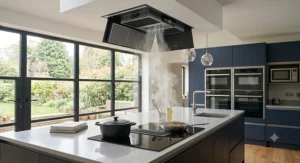
Finally, picture a self-build or major renovation project centred on a large kitchen island with a hob positioned metres from any external wall — a hugely popular layout in modern UK new-builds, and one where ducting is often structurally impossible without an expensive bulkhead. This is precisely the scenario the CIARRA CBCB4850 Island Hood was designed to solve, and it’s genuinely the only product on this list built to handle heavy, sustained frying directly above the cooking surface rather than cleaning air after the fact.
How to Choose a Cooker Hood Alternative
Working through the following steps in order will save you from buying twice.
- Measure your kitchen’s floor area first. CADR and coverage figures are meaningless without knowing your actual square metreage — a unit rated for 20m² in a 35m² open-plan space will simply never keep up.
- Identify whether you need source capture or ambient cleaning. If you fry or wok-cook regularly, a recirculating hood positioned directly above the hob will outperform a purifier sitting on a countertop metres away.
- Check for a genuine activated carbon layer, not just HEPA. HEPA alone captures particles but does almost nothing for the gases responsible for lingering odour — you need both.
- Factor in ongoing filter costs, not just the purchase price. A cheaper unit with expensive, frequently-replaced filters can cost more over three years than a pricier model with cheaper consumables.
- Consider noise levels if the kitchen adjoins a living or dining space. Look for decibel ratings on lower speeds specifically, since that’s where the unit will spend most of its running time.
- Check smart features against how you’ll actually use them. App control and auto-sensing genuinely help if you forget to switch units on; they’re wasted money if you’ll never open the app.
- Confirm your kitchen’s ventilation still meets building regulations, particularly if you have a gas hob — an air purifier or recirculating hood is not a substitute for background ventilation under UK rules, which we cover in detail below.
Common Mistakes When Buying a Cooker Hood Alternative
The single most frequent mistake is buying based on a bedroom-rated air purifier’s coverage figure and assuming it translates directly to kitchen use — cooking generates far denser bursts of particulates and gases than dust or pollen, so a unit rated generously for a living room can feel underpowered the first time you fry bacon. A close second is ignoring the carbon filter replacement schedule entirely, treating it as a “buy once” appliance rather than a consumable, which quietly erodes odour performance over months without the owner noticing until guests comment on it.
Buyers also frequently underestimate positioning, tucking a purifier into a corner or cupboard top for tidiness, which starves it of the polluted air it needs to draw in. Another recurring pitfall, particularly relevant if you have a gas hob, is assuming any cooker hood alternative handles combustion byproducts like carbon monoxide — as a rule, HEPA and carbon filtration primarily addresses particulates and organic odour compounds, not dangerous gases, so a working carbon monoxide detector remains essential regardless of which air purifier or recirculating hood you choose. Finally, many buyers skip checking whether their existing kitchen still meets background ventilation requirements once they remove a ducted hood, which can create condensation and mould issues over time even if odour control feels adequate day to day.
Recirculating Cooker Hood vs Extraction Hood
The core difference between a recirculating cooker hood vs extraction hood setup comes down to where the polluted air ends up. A traditional ducted extraction hood pulls smoke, steam and grease-laden air straight out of the building through an external wall or roof vent — the air genuinely leaves the house, taking heat, moisture and combustion byproducts with it. A recirculating cooker hood, by contrast, passes that same air through a grease filter and an activated carbon filter, then returns the cleaned air straight back into the kitchen.
In practice, this means ducted extraction wins decisively on steam and humidity control, since no filter fully captures water vapour the way venting outside does — a genuinely important consideration in bathrooms and kitchens where condensation drives mould growth. Recirculating systems, however, win on installation flexibility and running cost, since there’s no ductwork to install or maintain, no external wall penetration required, and typically lower ongoing energy use. Reviewers and tradespeople alike consistently note that recirculating hoods perform closest to ducted equivalents when carbon filters are replaced on schedule and the unit is sized generously for the room — skimp on either and the performance gap widens noticeably within a few months of daily use.
Air Purifier for Kitchen Island Layouts
An air purifier for kitchen island setups faces a specific engineering challenge: the hob typically sits metres from any wall, meaning a countertop purifier positioned nearby is fighting an uphill battle against the sheer volume of rising steam and smoke from an exposed, all-sides cooking surface. This is precisely why the CIARRA CBCB4850 Island Hood exists as a category of its own — a ceiling-mounted recirculating unit engineered with 360-degree capture specifically for island installations, rather than a portable device designed for bedroom or living-room use pressed into kitchen service.
If a dedicated island hood isn’t in the budget or the ceiling structure won’t support one, the next-best approach is running two smaller purifiers positioned on opposite sides of the island rather than one larger unit off to the side, since this at least partially compensates for the lack of directly-overhead capture. What most buyers overlook about island kitchens specifically is that background ventilation, such as trickle vents in nearby windows, becomes even more important precisely because there’s no ducted extraction pulling stale air out — without it, moisture from cooking has genuinely nowhere to go but into your walls and ceiling.
Building Regulations Kitchen Ventilation Guide
This is the section most cooker hood alternative buyers skip, and it’s the one that can cause the most expensive problems later. Under building regulations kitchen ventilation rules in England, set out in Approved Document F of the Building Regulations, kitchens require extract ventilation to remove moisture and pollutants — specifically, a minimum intermittent extract rate of 13 litres per second generally, rising to 30 litres per second when a hob-mounted extractor is used directly above the cooking surface. Critically, these figures apply regardless of whether you use a ducted hood, a recirculating hood, or rely on an air purifier — a purifier or recirculating hood is not automatically treated as compliant background or purge ventilation under the regulations, because it recirculates rather than removes moisture from the building.
In practice, this means most kitchens still need either an opening window for purge ventilation, adequate trickle vents for background ventilation, or in more airtight modern builds, a whole-house mechanical ventilation system, entirely separate from whatever cooker hood alternative you choose for odour and smoke control. If you’re removing an existing ducted hood as part of a renovation, it’s worth checking with your local building control body or a qualified installer, since removing extract ventilation without replacing it adequately can technically breach Part F even if your new air purifier makes the kitchen smell perfectly fresh. Gas hob owners have an additional consideration: adequate ventilation also supports safe dispersal of combustion byproducts, which is a separate safety issue from odour control entirely, and one no carbon-filter air purifier is designed to address.
Features That Actually Matter (And Those That Don’t)
Marketing copy across this category leans heavily on flashy extras, so it’s worth separating genuine performance drivers from nice-to-haves. A genuine activated carbon layer with reasonable weight/volume of carbon media matters enormously — this is what actually tackles odour, and thin, token carbon layers on cheaper units are a common corner cut. CADR rating matched honestly to your room size matters just as much, since an underpowered unit in a large kitchen will never keep pace no matter how good its filter technology is on paper.
By contrast, ionisers and UV-C sterilisation features, while not harmful in most modern units, add relatively little for typical kitchen odour and grease control, and a minority of sensitive users report faint metallic smells or mild irritation from ionised air run continuously near food prep. Smart app connectivity is genuinely useful if you’ll actually use it to schedule pre-emptive runs before cooking, but it’s pure marketing padding if you’ll only ever use the physical buttons. Aroma sponges and fragrance-diffusing extras, seen on several budget units, are arguably counterproductive in a kitchen specifically, since masking scent with fragrance does nothing for the underlying air quality and can make genuine odour problems harder to notice early.
Long-Term Cost & Maintenance
The purchase price is only the opening bid in what a cooker hood alternative actually costs over its lifetime. Carbon filters typically need replacing every two to six months depending on cooking frequency and intensity, and replacement costs vary significantly between brands — some budget units use proprietary filters priced disproportionately to the unit’s original cost, effectively locking buyers into an expensive consumables cycle. Running costs also differ meaningfully: a small countertop purifier drawing modest wattage on a low continuous setting costs relatively little to run year-round, whereas a higher-airflow recirculating hood used on booster settings during heavy cooking sessions will draw noticeably more.
Factoring in filters, electricity and eventual unit replacement (most air purifiers have a realistic five-to-eight year working life before fan bearings or electronics degrade), the true cost-per-year gap between a budget and premium unit narrows considerably compared to the sticker-price difference alone. For households doing genuinely heavy daily cooking, spending more upfront on a unit with a longer-lasting carbon filter and more efficient fan motor, such as the Coway Airmega 100 or the CIARRA CBCB4850, often works out cheaper across a five-year span than repeatedly replacing an underpowered budget unit that’s been pushed beyond its design limits.
Frequently Asked Questions
❓ Can I use an air purifier instead of a cooker hood in the UK?
❓ Is a recirculating cooker hood as good as an extractor fan?
❓ Do I need planning permission for a cooker hood alternative?
❓ How often should I change the carbon filter in a kitchen air purifier?
❓ What size air purifier do I need for an open-plan kitchen?
Conclusion
Choosing a cooker hood alternative ultimately comes down to being honest about your kitchen layout and cooking habits rather than chasing the highest spec sheet. Renters and small-kitchen owners will get excellent value from something like the Levoit Core 300S, families in open-plan spaces should lean towards the higher-CADR WINIX 5500-2 or Philips Series 900, and anyone tackling a genuinely vent-free kitchen island really does need a dedicated solution like the CIARRA CBCB4850. What every option shares is a simple truth: a carbon filter and a fan can get remarkably close to a ducted hood’s performance, but they work best when sized generously, positioned sensibly, and maintained on schedule rather than left running until someone complains about the smell.
None of this replaces checking your obligations under UK building regulations, particularly if you’re removing existing ducted ventilation as part of a renovation — a fresh-smelling kitchen and a building-regs-compliant one aren’t automatically the same thing, and it’s worth five minutes with your local building control team or a look at independently tested air purifier performance data before you commit. Whichever route you take, the seven products above represent genuinely tested, currently available options rather than guesswork — take the time to match one to your actual kitchen, and you’ll spend a lot less time apologising to dinner guests about the smell of last night’s fish.
✨ Don’t Miss These Exclusive Deals!
🔍 Take your kitchen ventilation to the next level with these carefully selected products. Click on any highlighted item to check current pricing and availability. These tools will help you create a fresher, healthier cooking space your whole family will notice!
Recommended for You
- Air Purifier for Pet Odours: 7 Best Picks Tested for 2026
- Air Purifier For Smoke Odour: 7 Real UK Picks Tested (2026)
- Air Purifier For Odours: 7 Best Picks To Banish Smells (2026)
Disclaimer: This article contains affiliate links. As an Amazon Associate, I earn from qualifying purchases. If you purchase products through these links, we may earn a small commission at no additional cost to you.
✨ Found this helpful? Share it with your friends! 💬🤗
