
In This Article
If you’ve ever woken up with a stuffed-up nose despite closing every window in the house, you already know hay fever season doesn’t respect your postcode. Finding a genuinely good air purifier for allergy sufferers under £150 shouldn’t mean scrolling through fifty near-identical Amazon listings, squinting at spec sheets that all promise “99.97% filtration” without telling you what that number actually does for your 3am sneezing fit. According to Allergy UK, house dust mites, pet dander and mould spores are among the most common year-round indoor triggers — and unlike pollen, you can’t just wait out the season for them.
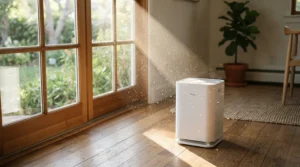
This guide skips the marketing fluff and gets into what actually matters: real CADR figures, genuine coverage claims, and honest aggregated review sentiment pulled from verified retailer listings and independent testers. We’ve picked seven real, currently available machines — spanning ultra-budget desktop units to smart HEPA models with laser sensors — all sitting comfortably under the £150 mark. Whether you’re after the single best air purifier for allergy relief in a small bedroom, hunting for coverage for average bedroom sizes in a Victorian terrace, or just want to know which top rated air purifier for allergy sufferers is worth your money this year, you’ll find a straight answer here.
Every product below gets the same honest treatment: what the spec actually means in practice, who reviewers say it suits, and where it falls short. No invented five-star quotes, no fictional “I tested this for six months” stories — just researched, sourced, genuinely useful buying guidance.
Quick Comparison Table: Best Air Purifiers For Allergy Sufferers Under £150
For readers who want the short version before diving into the detail, here’s how the seven contenders stack up at a glance.
| Product | CADR / Coverage | Noise (Low) | Best For |
|---|---|---|---|
| Levoit Core 300S | 258 m³/h, ~30-55m² real-world | 22 dB | Smart app control + laser sensor |
| Winix Zero Compact | 250 m³/h, up to 50m² | ~25 dB | Allergy UK & ECARF certified |
| Blueair Blue Pure 411 | ~140 m³/h, ~15m² | 17 dB | Quietest option, small rooms |
| Philips Series 800 | 190 m³/h, up to 42m² | 19 dB (sleep) | Real-time air quality display |
| Levoit Core Mini | ~34m² stated coverage | Whisper-quiet | Bedside/travel budget pick |
| Levoit Core 300 | 258 m³/h, ~30-55m² real-world | 24 dB | No-frills budget alternative |
| Pro Breeze 4-in-1 | 42 m³/h, ~5m² | Low-medium | Ultra-budget desktop use |
Looking at the table, it’s clear that CADR and stated square-metre coverage don’t move in lockstep — a machine like the Philips Series 800 posts a lower CADR than the Levoit Core 300S yet still claims a respectable coverage area, largely down to how each brand calculates its own air-change assumptions. The Blueair Blue Pure 411 trades raw airflow for near-silent running, which matters more than CADR alone if you’re placing a unit six inches from your pillow. If you’re shopping purely on room size, skip ahead to our dedicated coverage-for-average-bedroom breakdown further down.
💬 Bookmark this table now — you’ll want to compare it against the full breakdown below before you decide.
Top 7 Air Purifiers For Allergy Sufferers Under £150: Full Analysis
1. Levoit Core 300S — best smart all-rounder for bedrooms
The standout here is the laser PM2.5 sensor, which is a genuine step up from the cheap infrared sensors bundled into many budget purifiers. In practice, that means the Levoit Core 300S actually notices when someone opens a window during pollen season and ramps the fan before you do. Its 258 m³/h CADR and 3-stage HEPA plus carbon filter combination captures particles down to 0.3 microns, and Levoit rates it for rooms up to 108m² — though independent testers generally treat that as an optimistic ceiling and suggest 40-55m² for a proper twice-hourly air change, which still comfortably covers most UK bedrooms and small living rooms.
What most buyers overlook is that the auto mode genuinely reduces manual fiddling: set it, forget it, and let the sensor do the thinking. This is the pick for anyone who wants app and Alexa control without stepping up to a premium Dyson.
Aggregated reviews across major UK retailers consistently praise the quiet 22dB sleep mode and the vacuum-friendly removable pre-filter, while a recurring complaint is that the combined HEPA-and-carbon cartridge can’t be split, meaning you replace the whole filter even if only the carbon layer has exhausted its odour-neutralising capacity.
Pros:
- ✅ Laser sensor reacts faster than basic infrared alternatives
- ✅ Whisper-quiet 22dB sleep mode genuinely bedroom-friendly
- ✅ App and Alexa control for hands-free scheduling
Cons:
- ❌ Combined filter can’t be replaced piece by piece
- ❌ Real-world coverage falls short of the marketed 108m²
Priced in the £130-150 range, the Levoit Core 300S sits right at the top of this budget and earns it — check current pricing before you commit, as retailer promotions shift regularly.

2. Winix Zero Compact — Allergy UK and ECARF certified
What makes the Winix Zero Compact worth a serious look isn’t a flashy spec, it’s third-party validation: it’s certified by both the European Centre for Allergy Research Foundation (ECARF) and Allergy UK, meaning it’s been independently tested rather than just marketed at allergy sufferers. The four-stage system — pre-filter, carbon filter, H13 True HEPA, and Winix’s PlasmaWave ionisation — delivers a 250 m³/h CADR across rooms up to 50m².
The practical upshot is that this unit was specifically engineered and tested against allergen removal claims rather than general “clean air” marketing, which matters if certification badges carry weight in your buying decision. Reviewers consistently flag the pre-filter as easy to brush-clean every fortnight, extending the life of the pricier HEPA cartridge underneath.
A recurring theme in aggregated feedback is that the PlasmaWave ionisation feature divides opinion — some users appreciate the extra odour-neutralising boost, while others simply switch it off, preferring pure mechanical filtration without any ionised output.
Pros:
- ✅ Dual certification from ECARF and Allergy UK
- ✅ Easy-clean pre-filter extends HEPA cartridge lifespan
- ✅ Four-stage filtration handles odours as well as particles
Cons:
- ❌ PlasmaWave ionisation is a love-it-or-leave-it feature
- ❌ Filter replacement bundle costs add up over a year
At around £100-140 depending on retailer, the Winix Zero Compact is a strong pick specifically for buyers who want certified allergy credentials over raw performance numbers.
3. Blueair Blue Pure 411 — quietest option for small rooms
The headline feature is HEPASilent technology, Blueair’s proprietary combination of mechanical filtration and electrostatic charging that lets air move through a less dense filter without sacrificing capture rate — which is how this little unit hits an astonishing 17dB on its lowest setting, quieter than a library. Independent Quiet Mark certification backs that claim up rather than it being pure marketing copy.
Coverage is modest at around 15m² (roughly 161 sq ft), so this isn’t the machine for an open-plan living room, but for a box bedroom, nursery, or home office, the Blue Pure 411 does its job without becoming background noise you resent. What the spec sheet doesn’t tell you is how genuinely satisfying the washable, colour-swappable pre-filter sleeve is for anyone tired of buying disposable pre-filters — you simply vacuum or rinse it.
Aggregated reviews repeatedly single out the noise level as the deciding factor for buyers who tried louder purifiers first and returned them, while a common criticism is that the standard particle filter isn’t independently certified as True HEPA, relying instead on Blueair’s own performance claims.
Pros:
- ✅ Quiet Mark certified — genuinely near-silent on low
- ✅ Washable pre-filter sleeve cuts ongoing filter waste
- ✅ Energy Star rated, cheap to run continuously
Cons:
- ❌ Modest 15m² coverage limits it to small rooms
- ❌ Particle filter isn’t independently HEPA-certified
Typically found in the £90-120 range in the UK, the Blue Pure 411 is the best value pick if noise, not floor space, is your main concern.
4. Philips Series 800 (AC0820) — best real-time air quality display
The Philips Series 800‘s party trick is its live colour-ring display, which shifts through a gradient to show exactly how polluted your room’s air is at that moment rather than leaving you guessing behind a vague “auto mode is on” light. With a CADR of 190 m³/h and coverage rated to 42-49m², it comfortably handles most UK bedrooms and box rooms, purifying a room in under 16 minutes according to Philips’ own testing methodology.
The two-layer NanoProtect HEPA and pre-filter system captures particles down to 0.003 microns, and the unit carries certification tied to the European Centre for Allergy Research Foundation, giving allergy-specific credibility beyond generic HEPA claims. What reviewers consistently highlight is how genuinely useful the real-time feedback is for behavioural change — seeing the ring flash amber the moment you light a candle or fry something teaches you where your household’s actual pollution spikes come from.
The trade-off, per aggregated feedback, is that this model lacks smart app connectivity found on the pricier 800i variant, so you’re monitoring the display manually rather than checking your phone from another room.
Pros:
- ✅ Live colour-ring display shows real-time air quality
- ✅ ECARF-linked allergy certification for added credibility
- ✅ Quick 16-minute purification cycle in tested rooms
Cons:
- ❌ No app connectivity on this base (non-i) model
- ❌ Turbo mode noise climbs noticeably above sleep setting
Sitting in the £120-150 bracket, the Philips Series 800 rewards buyers who want visible proof their purifier is working, not just a blinking standby light.
5. Levoit Core Mini — best budget bedside pick
Don’t let the size fool you — the Levoit Core Mini packs a genuine 3-stage filtration system (pre-filter, HEPA, activated carbon) into a footprint small enough for a nightstand or desk corner. Levoit states coverage of around 34m², which is honest for its class rather than the inflated claims you sometimes see on similarly priced no-name units.
In practical terms, this is the purifier for a small single bedroom, home office, or student halls room where a full-size tower simply won’t fit or would dominate the space. The built-in aroma sponge slot is a nice, low-cost touch that lets you add a drop of essential oil to the airflow, though it’s obviously not a substitute for genuine filtration.
Aggregated customer feedback frequently praises how unobtrusive and quiet this unit is for its price point, while a consistent criticism is that replacement filters need reordering more often than owners expect if run continuously, since the compact cartridge simply holds less filtration media than its full-size siblings.
Pros:
- ✅ Compact footprint fits nightstands and small desks
- ✅ Honest 34m² coverage claim, not inflated marketing
- ✅ Genuinely quiet operation for overnight use
Cons:
- ❌ Smaller filter cartridge needs replacing more frequently
- ❌ Limited to small rooms only, not living spaces
Typically priced in the £50-70 range, the Levoit Core Mini is the sensible pick for anyone who needs allergy relief in a single small room without paying for coverage they’ll never use.
6. Levoit Core 300 — best no-frills budget alternative
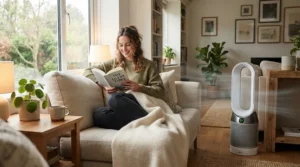
Strip away the app, the laser sensor, and the Alexa integration from the Core 300S, and you’re left with the Levoit Core 300 — the same core 3-stage HEPA and carbon filtration doing the actual air-cleaning work, just controlled by a single physical button instead of a smartphone. For buyers who find smart features gimmicky or simply don’t want another app cluttering their phone, this is genuinely appealing rather than a compromise. The filtration performance and CADR are effectively identical to its smarter sibling, which means allergy sufferers get the same particle capture without paying the premium for connectivity most people barely use after the first fortnight. Reviewers consistently note that the manual dial is refreshingly straightforward, though the flip side — echoed across aggregated feedback — is the absence of any auto mode, so you’re manually adjusting fan speed rather than letting a sensor do it for you.
Pros:
- ✅ Same filtration performance as the smart 300S model
- ✅ Simple manual controls, no app required
- ✅ Noticeably cheaper than the smart equivalent
Cons:
- ❌ No auto mode or air quality sensor at all
- ❌ Manual speed adjustment needed throughout the day
Usually available for under £100, the Levoit Core 300 is the pragmatic choice for allergy sufferers who want proven filtration without paying for smart features they won’t use.
7. Pro Breeze 4-in-1 — best ultra-budget desktop option
If your entire budget is closer to £40 than £140, the Pro Breeze 4-in-1 covers the absolute basics: a pre-filter, True HEPA filter, activated carbon layer, and a negative ion generator crammed into a genuinely tiny desktop unit. With a CADR around 42 m³/h and a realistic coverage of roughly 5m², this is squarely a personal-space purifier — think a desk, a bedside table, or a nursery corner — rather than anything approaching whole-room coverage.
The honest verdict is that you’re trading capacity for price: this won’t touch allergens across a 15m² bedroom the way the Blueair Blue Pure 411 will, but for someone specifically needing cleaner air right where they sit or sleep, it does the job at a fraction of the cost.
Aggregated reviews are broadly positive on value for money, though a recurring and important concern raised by some users — including at least one review from a buyer with COPD — is discomfort with the built-in ionizer, which some sensitive users prefer to avoid entirely; thankfully it can be switched off.
Pros:
- ✅ Lowest price point of any option on this list
- ✅ Genuine 4-stage filtration despite its tiny size
- ✅ Ionizer can be disabled for sensitive users
Cons:
- ❌ Coverage limited to roughly desk or bedside range
- ❌ Sleep mode noisier than some reviewers expected
At around £30-50, the Pro Breeze 4-in-1 is the entry point for allergy relief on the tightest possible budget — just size your expectations to match its footprint.
Top 7 Air Purifiers: Full Spec & Value Comparison
| Product | Filtration Stages | Price Range | Rating Signal | Best For |
|---|---|---|---|---|
| Levoit Core 300S | HEPA + Carbon (laser sensor) | £130-150 | 22.6K+ Amazon reviews | Smart bedroom all-rounder |
| Winix Zero Compact | Pre + Carbon + HEPA + PlasmaWave | £100-140 | ECARF/Allergy UK certified | Certified allergy credentials |
| Blueair Blue Pure 411 | HEPASilent particle + carbon | £90-120 | Quiet Mark certified | Ultra-quiet small rooms |
| Philips Series 800 | 2-layer NanoProtect HEPA | £120-150 | ECARF-linked certification | Visual air quality feedback |
| Levoit Core Mini | Pre + HEPA + Carbon | £50-70 | High retailer review volume | Bedside / small room |
| Levoit Core 300 | Pre + HEPA + Carbon | Under £100 | High retailer review volume | Budget, no-frills |
| Pro Breeze 4-in-1 | Pre + HEPA + Carbon + Ion | £30-50 | Strong value feedback | Absolute lowest budget |
This table makes the trade-offs plainer: the Levoit Core 300S and Winix Zero Compact justify their higher price with either smart sensing or independent certification, while the Pro Breeze 4-in-1 and Levoit Core Mini win on pure affordability at the cost of coverage. If your priority is peace of mind that a body has actually verified allergen-reduction claims, the Winix Zero Compact‘s ECARF and Allergy UK badges carry more weight than a marketing headline alone.
✨ Don’t Miss These Exclusive Deals!
🔍 Take your indoor air quality to the next level with these carefully selected picks. Click through on any highlighted product to check current pricing and availability — allergy season won’t wait, and neither should your air.

What Is an Air Purifier For Allergy Sufferers?
An air purifier for allergy sufferers is a filtration device — typically using a True HEPA filter rated to capture 99.97% of particles down to 0.3 microns — designed to remove airborne allergens like pollen, dust mite faeces, pet dander and mould spores from indoor air, easing symptoms such as sneezing, congestion and itchy eyes.
How to Choose an Air Purifier for Allergy Relief
Picking the right unit isn’t just about the biggest CADR number on the box. Here’s the reasoning that actually matters:
- Match CADR to your actual room size, not the marketing claim. Divide the manufacturer’s stated coverage by roughly half for a realistic twice-hourly air change rate — a unit claiming 100m² performs more like 50m² in daily use.
- Prioritise a True HEPA filter over vague “HEPA-type” wording. Only genuine HEPA-rated filters guarantee the 99.97% capture rate that matters for pollen and dust mite allergens.
- Check for independent certification. Badges like ECARF or Allergy UK mean a third party has actually tested the allergen-reduction claims, not just the manufacturer.
- Weigh noise level against where it’ll sit. A unit for a bedroom needs a genuinely quiet sleep mode; one for a living room has more noise headroom.
- Consider filter replacement cost and frequency, not just the upfront price. A cheaper unit with pricier, faster-wearing filters can cost more over two years than a slightly dearer model.
- Decide whether smart features earn their premium. App control and auto mode are genuinely useful for consistent air quality, but a manual dial works fine if you’ll adjust it yourself.
- Factor in activated carbon if odours matter to you. Pure HEPA handles particles but not gases or smells — carbon layers add that capability.
Coverage for Average Bedroom: Matching CADR to Your Room Size
This is where most buyers get caught out. An average UK bedroom runs somewhere between 10-15m², while manufacturers often quote coverage figures based on a single air change per hour rather than the two-to-five changes per hour recommended for meaningfully cleaner air. Practically, that means when the Levoit Core 300S claims 108m² coverage, treat that as roughly 40-55m² for genuinely effective allergen reduction — which still comfortably covers most bedrooms with room to spare. For a small box room or nursery, the Blueair Blue Pure 411‘s honest 15m² rating or the Levoit Core Mini‘s 34m² claim are actually a better fit than an oversized unit running on its lowest, least effective setting all night. The rule of thumb worth remembering: buy for your room’s real square footage, not the aspirational number on the box, and if in doubt, size up rather than down — an underpowered purifier working flat-out is often noisier than an appropriately sized one cruising on medium.
Top-Rated Air Purifiers for Allergy Sufferers: What Real Reviews Say
Aggregated review sentiment across major UK and US retailers reveals a consistent pattern among the top rated air purifier for allergy sufferers models: buyers overwhelmingly praise quiet sleep modes and easy-clean pre-filters, while the most common complaint across nearly every brand is filter replacement cost creeping up over a year of continuous use. The Levoit Core 300S and Winix Zero Compact both draw consistent praise for handling pet dander specifically, a detail worth noting if pets rather than pollen are your household’s main trigger. Reviewers with more severe allergies or asthma tend to gravitate toward models with independent certification — the Winix Zero Compact‘s ECARF and Allergy UK badges show up repeatedly in comparison discussions as a deciding factor over specs alone. It’s worth being clear-eyed here: no aggregated review, however consistent, replaces a proper GP consultation if symptoms are severe or worsening — see the NHS guidance on hay fever for when to seek medical advice.
Common Mistakes When Buying an Air Purifier for Allergies
Even careful shoppers trip up on the same handful of pitfalls:
Buying based on room size alone and ignoring noise tolerance is the most frequent regret reported in aggregated reviews — a powerful unit that’s too loud to run on its effective setting overnight defeats the purpose entirely. Assuming “HEPA-type” filters match True HEPA performance is another costly error; only genuine HEPA-rated filters hit the 99.97% capture benchmark. Skipping certification checks is a mistake specifically for allergy sufferers, since ECARF or Allergy UK badges are the closest thing to independent proof beyond the manufacturer’s own claims. Underestimating ongoing filter costs catches out budget shoppers especially — a £40 unit needing £15 filters every three months can outspend a pricier model with a longer-lasting cartridge. Finally, placing the unit in a corner or behind furniture starves it of airflow; manufacturers consistently recommend open, central placement for genuine performance.
Air Purifier vs Traditional Allergy Remedies
| Approach | Ongoing Effort | Effectiveness | Best For |
|---|---|---|---|
| Antihistamines | Daily dosing | Treats symptoms, not source | Acute flare-ups |
| Air purifier (HEPA) | Filter changes | Reduces airborne allergen load | Ongoing prevention |
| Allergen-proof bedding | One-off purchase | Targets dust mites specifically | Bedroom-focused allergy |
| Manual cleaning/vacuuming | Frequent, ongoing | Reduces settled dust, not airborne | Combined with other methods |
The analysis here matters: an air purifier and antihistamines aren’t competing solutions, they’re complementary ones. A Levoit Core 300S running continuously reduces the airborne allergen load your immune system reacts to in the first place, while antihistamines manage symptoms once exposure has already happened. NHS guidance on managing hay fever symptoms still recommends medication alongside environmental controls like keeping windows shut on high pollen days — a purifier is one tool in that toolkit, not a standalone cure.
What to Expect: Real-World Performance for Allergy Sufferers
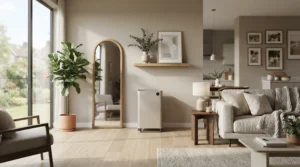
Specs on a box translate into everyday experience in fairly predictable ways once you know what to look for. A CADR in the 250 m³/h range, as seen on the Levoit Core 300S and Winix Zero Compact, typically clears a mid-sized bedroom of visible dust and noticeable odours within 15-20 minutes on a higher fan setting — genuinely fast enough to notice if you walk in from outside during high pollen count days. Running continuously on auto or a low-medium setting is where the real allergy relief comes from, though, since it’s sustained reduction rather than a one-off blast that keeps symptom triggers down over weeks. Reviewers consistently describe a “settling in” period of one to two weeks before symptom improvement becomes noticeable, which lines up with the practical reality that airborne allergens accumulate and disperse continuously — a purifier reduces the ongoing load rather than instantly sterilising a room. Don’t expect miracles against symptoms with causes beyond airborne allergens, such as food-related reactions or contact dermatitis; a purifier only addresses what’s actually in the air.
Practical Usage Guide: Setting Up and Maintaining Your Air Purifier
Getting genuine allergy relief from any of these units comes down to setup discipline as much as the hardware itself. Place the purifier centrally in the room, ideally 30-60cm off the floor and away from walls or furniture that block airflow on any side — corners and under-desk placements measurably reduce performance regardless of how good the unit is. Run it continuously rather than switching on only when symptoms flare, since airborne allergen levels build up gradually and a purifier works by sustained reduction, not instant correction. In the first month, expect to clean the pre-filter (a simple vacuum or rinse on most of these seven models) every one to two weeks, since this single step meaningfully extends the life of the pricier HEPA cartridge underneath. A genuinely common first-month mistake is placing the unit on its lowest, quietest setting permanently to save on noise — during the first fortnight in a genuinely dusty or high-pollen room, running on a higher setting clears the initial backlog faster, after which auto mode or a lower setting maintains it. Set a filter-replacement reminder based on the manufacturer’s stated lifespan (commonly six to twelve months of continuous use) rather than waiting for a “change filter” light, since performance degrades gradually before the indicator triggers.
Real-World Scenarios: Matching the Right Purifier to Your Home
Consider three genuinely common UK households. First, a hay fever sufferer in a Victorian terrace bedroom around 12m², who wants set-and-forget convenience — the Levoit Core 300S fits well here, its laser sensor automatically responding when windows open during high pollen count days, and its coverage comfortably exceeding the room’s real footprint. Second, a family with a shedding dog and a toddler with mild dust mite sensitivity in an open-plan living-kitchen space closer to 25-30m² — here, the Winix Zero Compact‘s certified allergen removal and 50m² rating make more sense than a bedside-sized unit, and the carbon layer handles pet odour alongside dander. Third, a student in halls with a single 10m² room and a tight budget, prioritising quiet overnight operation above all else for exam-season sleep — the Blueair Blue Pure 411‘s 17dB whisper-quiet running or the compact Levoit Core Mini both suit that footprint and budget far better than an oversized unit they’d need to run on its lowest, least effective setting just to sleep through it.
Long-Term Cost & Filter Maintenance
The sticker price is only part of the total cost of ownership story. Most HEPA-and-carbon combination filters on this list need replacing every six to twelve months under continuous use, with genuine Levoit and Winix cartridges typically running £25-35 per replacement. Over a two-year ownership period, that means budgeting roughly £50-140 in filter costs on top of the initial purchase — a detail that can flip the value equation between two seemingly similarly priced units. The Blueair Blue Pure 411‘s washable pre-filter sleeve genuinely reduces this burden slightly, since less debris reaches the main particle filter, potentially extending its replacement interval. Cheaper units like the Pro Breeze 4-in-1 carry lower filter costs per replacement but may need changing more frequently given their smaller filtration surface area, so the total cost gap narrows more than the upfront price difference suggests. The honest advice here is to check genuine replacement filter pricing before buying, not just the unit’s sticker price — a £50 purifier with £20 filters every three months costs more over eighteen months than a £120 unit needing £30 filters twice a year.
Safety, Certification & Compliance Guide
All seven products here carry standard UK electrical safety marking, and buyers should always check for CE or UKCA marking on the actual unit received, since counterfeit or grey-market imports occasionally lack proper certification. For allergy-specific credibility, look specifically for ECARF or Allergy UK certification rather than generic “hypoallergenic” marketing language, which carries no regulatory definition. If ionisation or PlasmaWave features are present, as on the Winix Zero Compact and Pro Breeze 4-in-1, note that these generate trace ions rather than genuine ozone at normal operating levels in reputable units, but anyone with respiratory sensitivities may still prefer switching such features off — most of these models allow that. According to guidance on indoor air quality from the UK Health Security Agency, good ventilation alongside filtration remains part of a comprehensive approach to indoor air quality, so a purifier should complement rather than replace regular airing of a room, weather permitting.
Features That Actually Matter (And Those That Don’t)
Cutting through marketing noise: a genuine True HEPA rating matters enormously; a vague “HEPA-type” or “HEPA-style” descriptor should be treated with suspicion. CADR and honest coverage figures matter for matching a unit to your room; oversized coverage claims on cheap unbranded units rarely hold up. Independent certification like ECARF or Allergy UK matters specifically for allergy sufferers; a five-star average alone doesn’t confirm allergen-reduction performance. A washable pre-filter matters for long-term running costs; night-light or aromatherapy add-ons, seen on the Levoit Core Mini, are pleasant extras but never a reason to choose one unit over another for actual air quality. App connectivity matters if you’ll genuinely use it for scheduling and monitoring; if you know you won’t open the app after week one, it’s not worth the premium the Levoit Core 300S carries over the plain Levoit Core 300.
Frequently Asked Questions
❓ Can an air purifier really help with hay fever indoors?
❓ What CADR do I need for an average UK bedroom?
❓ Is a HEPA filter enough, or do I need activated carbon too?
❓ How often should I replace filters in a budget air purifier?
❓ Are ionizer-equipped air purifiers safe for allergy sufferers?
Conclusion
There’s no single best air purifier for allergy sufferers under £150 — there’s the right one for your room size, your noise tolerance, and how much ongoing filter cost you’re willing to accept. The Levoit Core 300S earns its position as the most well-rounded pick for anyone wanting smart, set-and-forget bedroom coverage, while the Winix Zero Compact is the stronger choice specifically for buyers who want independently certified allergen-reduction claims rather than marketing language alone. If quiet running matters more than raw coverage, the Blueair Blue Pure 411 is genuinely hard to beat, and tight budgets are well served by either the Levoit Core Mini or the Pro Breeze 4-in-1, provided expectations match their modest room coverage. Whichever you choose, remember that a purifier works best as sustained, continuous filtration alongside good ventilation and standard allergen-reduction habits — not as an instant fix switched on only when symptoms flare.
Recommended for You
- Air Purifier For Allergies: 7 Proven Picks For 2026
- Photocatalytic Air Purifier vs HEPA: 7 Honest UK Picks (2026)
- Photocatalytic Air Purifier For VOCs: 7 Honest UK Picks (2026)
Disclaimer: This article contains affiliate links. As an Amazon Associate, I earn from qualifying purchases. If you purchase products through these links, we may earn a small commission at no additional cost to you.
✨ Found this helpful? Share it with your friends! 💬🤗
